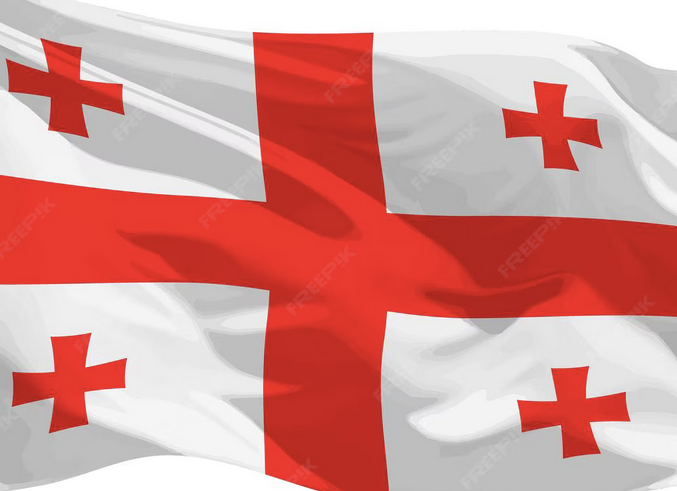
Before coming to Georgia, I imagine you will do some research about the country. You may already know that Georgia is a Christian country, but there is much more to this story.
Georgia is one of the oldest Christian countries in the world. Christianity was declared the state religion in 326 AD, during the reign of King Mirian III. Since then, Christianity has played a fundamental role in shaping Georgian identity, culture, architecture and history.
Throughout the centuries, despite invasions and pressure from powerful empires surrounding the country, Georgians managed to preserve their Christian faith and traditions.
Today, Georgia has thousands of churches and monasteries. Georgian church architecture has its own distinctive character, different from the architectural traditions of many other Orthodox countries. From small early medieval basilicas to monumental domed cathedrals, these buildings tell the story of the country’s history.
In this article, I would like to introduce you to three churches in Tbilisi that I believe you should not miss during your visit to the Georgian capital. Each of them represents a different period of Georgian history.
1. Holy Trinity Cathedral (Sameba)
The Holy Trinity Cathedral, commonly known as Sameba, is the largest cathedral in Georgia and one of the most impressive religious buildings in the Caucasus.
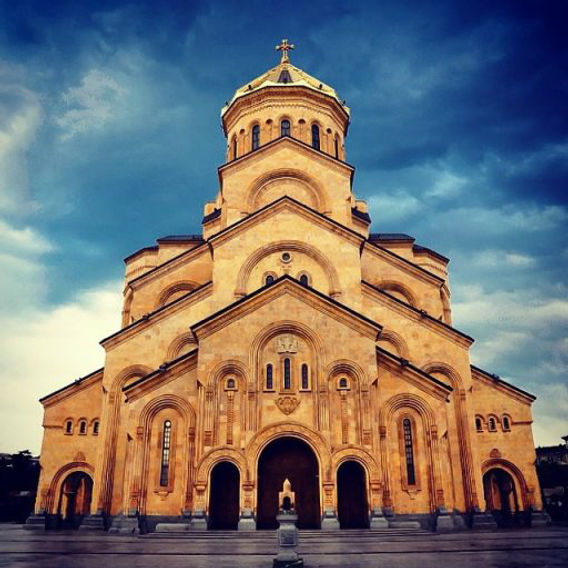
The idea of building a new cathedral came from Catholicos-Patriarch Ilia II. The project was intended to commemorate two important anniversaries: 2,000 years since the birth of Jesus Christ and 1,500 years of the Georgian Orthodox Church’s history.
The foundation stone was laid on November 23, 1995, and the cathedral was completed and consecrated on November 23, 2004, on Saint George’s Day.
The project was designed by Georgian architect Archil Mindiashvili. The cathedral stands on Elia Hill in the Avlabari district, overlooking the historic centre of Tbilisi.
Its height, including the cross, is approximately 86 metres, making it visible from many parts of the city.
One particularly interesting feature is that Sameba is not just a single church building. The complex incorporates nine chapels, four above ground and five underground. The underground section extends deep into Elia Hill.
The architecture combines traditional Georgian ecclesiastical elements with a monumental modern design. Inside, you can see extensive stone and marble decoration, impressive columns, religious paintings and icons.
What should you pay attention to?
First, look at the cathedral’s exterior. Notice its monumental dome, traditional Georgian architectural forms and the way the building dominates the surrounding landscape.
Inside, take some time to observe the paintings and religious decorations. The scale of the interior is particularly impressive.
I also recommend walking around the cathedral’s courtyard. From here, you can enjoy beautiful views of Tbilisi, especially towards the Old Town.
Sameba is not a medieval monument, but it has already become one of the most recognizable symbols of modern Georgia.
2. Anchiskhati Basilica – The Oldest Church in Tbilisi
If you want to discover the oldest surviving church in Tbilisi, Anchiskhati Basilica is the place to visit.
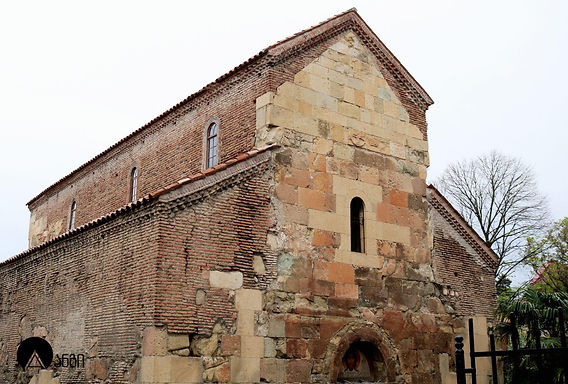
The church dates back to the 6th century and was built during the reign of King Dachi of Iberia, the son of King Vakhtang Gorgasali, who is traditionally associated with the foundation of Tbilisi.
According to historical accounts, King Dachi made Tbilisi the capital of the Kingdom of Iberia, and the construction of this church was part of the city’s early Christian development.
Originally, the church was dedicated to the Nativity of the Virgin Mary. So where does the unusual name Anchiskhati come from?
The answer is connected to one of the most important religious treasures in Georgian history: the Ancha Icon of the Saviour.
This precious icon was brought to Tbilisi from Ancha Monastery, in historical Klarjeti, in the 17th century. It depicts the face of Jesus Christ and is traditionally associated with the image of Christ Not Made by Human Hands.
The icon was decorated with precious metalwork by the famous Georgian goldsmith Beka Opizari during the medieval period. Its arrival in Tbilisi gave the church its present name, Anchiskhati, meaning the icon of Ancha.
Today, the original icon is preserved in the Shalva Amiranashvili Museum of Fine Arts in Tbilisi.
The church itself has experienced many difficult periods. It was damaged during invasions and underwent several restorations. In 1675, Catholicos Domenti II restored the basilica and built the beautiful brick bell tower that you can still see beside the church.
During the Soviet period, religious services were stopped, and the building was used for other purposes. It was returned to religious use after Georgia regained independence.
What should you pay attention to?
Unlike Sameba, Anchiskhati is a relatively small and modest building.
Pay attention to its three-nave basilica design. This is an important feature of early Georgian Christian architecture.
Also, look at the old stone walls and the separate brick bell tower. They reflect different periods in the building’s long history.
Another interesting detail is that Anchiskhati was not only a religious centre. It also played an important educational and cultural role in Tbilisi, with a school and seminary associated with the church.
For me, this is one of the best places to understand how Christian architecture developed in early Tbilisi.
3. Sioni Cathedral – One of the Most Important Churches in Georgia
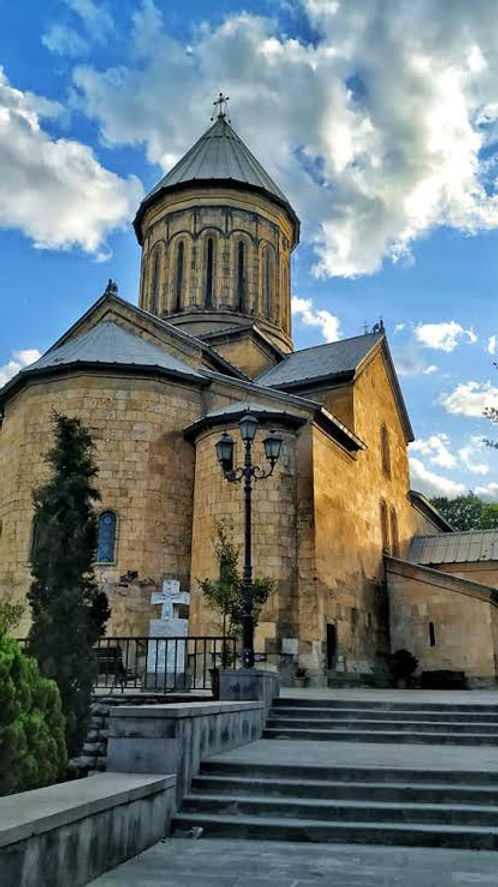
Located in the heart of Old Tbilisi, Sioni Cathedral is one of the most beautiful and historically important churches in the country.
Its name comes from Mount Zion in Jerusalem, following an old Georgian tradition of naming important churches after sacred places in the Holy Land.
The original church was built during the 6th–7th centuries. However, throughout its history, Sioni was repeatedly damaged by invasions, destroyed and rebuilt.
The present building reflects several different historical periods, with important elements dating from medieval reconstructions and later restorations.
For centuries, Sioni was the main cathedral of the Georgian Orthodox Church and the seat of the Catholicos-Patriarch of All Georgia. It retained this position until the consecration of Holy Trinity Cathedral in 2004.
But what makes Sioni particularly important is not only its architecture.
Inside the cathedral, you will find one of the most sacred relics of the Georgian Orthodox Church: the Cross of Saint Nino.
According to Georgian tradition, Saint Nino made her cross from grapevine branches and bound them together with her own hair.
Saint Nino was a woman from Cappadocia who came to Georgia in the 4th century and played a decisive role in spreading Christianity throughout the country. Her mission is closely connected with the Christianization of the Kingdom of Iberia during the reign of King Mirian III.
The Cross of Saint Nino is preserved in a special reliquary inside Sioni Cathedral and remains one of the most important religious treasures in Georgia.
Another interesting feature is the cathedral’s interior decoration. During the 19th century, the Russian artist and military officer Grigory Gagarin worked on the cathedral’s interior paintings, giving it much of its present appearance.
Sioni also witnessed important political events. On April 12, 1802, the Russian Imperial manifesto concerning the annexation of Georgia was announced here, in the presence of Georgian nobles.
This makes Sioni not only a religious monument but also a place closely connected with the country’s political history.
What should you pay attention to?
First, look for the Cross of Saint Nino. Even if you are not religious, understanding its importance will help you appreciate the history of Georgia.
Take a closer look at the paintings, iconostasis and interior decoration. Notice how the building combines different architectural and artistic periods.
Finally, when you leave the cathedral, spend a few minutes walking around Sioni Street. You are in one of the oldest parts of Tbilisi, surrounded by buildings that tell many different stories about the city.
My Recommendation
If you have limited time in Tbilisi, I recommend visiting all three churches.
They are not simply three religious buildings. They represent three different chapters of Georgian history: the early development of Christianity, the medieval religious tradition and the modern revival of Georgian national identity.
And if you are interested in understanding Georgia beyond its beautiful landscapes, traditional food and wine, these three churches are an excellent place to start.
mukhran guliashvili