Menu

Story of Georgian Prince, Who Fought on the Side of the Boers in South Africa 🇬🇪🇿🇦

When you see the headline of this blog, you might be surprised at how it was possible for a 19th-century Georgian prince to end up on another continent. However, his story is very interesting, and I am glad to present it in a simple way, accessible to ordinary readers rather than at an academic level.

Niko Bagrationi 1868-1933

Before moving to the main topic, I would like to briefly introduce the Georgian royal dynasty, the Bagrationi family. They ruled Georgia for almost nine centuries, from the 10th to the 19th century. We can say they are one of the longest-ruling dynasties in the world, after the imperial family of Japan.

In 1801, the Russian Empire abolished the Georgian Kingdom and exiled members of the family of the last king of Georgia, George XII. However, other branches of the Bagrationi family continued to live in Georgia. Niko Bagrationi belonged to one of these branches. Their residence was in the village of Mukhrani, so they were known as the Mukhrani Bagrationis.

 Château Mukhrani Former Palace of Bagarationi
Château Mukhrani Former Palace of Bagarationi

Niko Bagrationi was born in 1868 in Mukhrani, (40 km from Tbilisi) where he also grew up. From childhood, he loved traveling and adventure. One of the influences on his imagination was the Georgian literary masterpiece The Knight in the Panther’s Skin by Shota Rustaveli, in which the main character travels across the world, including to India.

When he grew up, his first journey abroad was to Russia, where he attended the inauguration of a Russian emperor. He was physically very tall, almost two meters in height. While in Russia, he became acquainted with another Georgian nobleman, Orbeliani, who invited him to go to South Africa for lion hunting. Niko Bagrationi was inspired by this idea, and they traveled to Paris on their way to South Africa. However, Orbeliani enjoyed Paris so much that he changed his mind and decided to stay there. Niko, on the other hand, remained determined to continue his journey.

On the ship, he met a new friend, the French Count de Breda, who convinced him not to go lion hunting but instead to support the Boers. At that time, it was quite popular internationally for volunteers to join the Boer side, similar in spirit to modern foreign volunteers in conflicts such as Ukraine.

Niko and French Count de Breda

Before arriving, Niko learned that the Boer republics in South Africa were at war with the British Empire. His initial goal changed, and he decided to join the Boers in their struggle against Britain. In his mind, the Boers were similar to Georgia, which had also been colonized by a larger empire.

During his journey, he first arrived in Madagascar and was impressed by the country, reportedly saying that the sky there felt much brighter than in his native Mukhrani.

Finally, in 1899, Niko Bagrationi arrived in South Africa at the port of Lourenço Marques (today’s Maputo), which was then a Portuguese colony and an important gateway to Southern Africa. From there, he traveled to Pretoria, the capital of the Transvaal Republic. He met President Paul Kruger and became a volunteer in the Boer army.

An interesting fact is that his unit reportedly captured Winston Churchill, who at that time was working as a military correspondent and was later Churchill managed to escape by the because they were relatively soft with prisoners of war.

Winston Churchill Who was captured by Nikos unit

In 1900, Niko Bagrationi was captured by the British. He was initially sentenced to death, but when British officers discovered he was a member of a royal family, his sentence was changed to exile on Saint Helena, the same island where Napoleon Bonaparte was once imprisoned.

When the war ended, he was released and went to France. Later, he returned to Georgia and wrote a book about his adventures before the Soviet invasion of 1921. He lived in a large palace in Mukhrani and was considered a wealthy nobleman. However, after the Soviets confiscated his property, the only way for him to survive was by selling tobacco at a train station in Tbilisi.

Despite all these hardships, he was not executed. He eventually passed away from natural causes in Tbilisi.

Mukhran guliashvili

used sources:

1.https://1tv.ge/video/adamianebi-istoriidan-niko-bagration-mukhraneli-igive-niko-buri-dimitri-silaqadze-istorikosi/

2.https://youtu.be/WAe5VNrCL1M?si=J3yY5lr8dS4eZRzW

3.http://www.nplg.gov.ge/emigrants/ka/00000009/

The Restaurant in Tbilisi Where Fidel Castro and Nikita Khrushchev Had Their Reconciliation Dinner 🇬🇪🇨🇺

The Restaurant in Tbilisi Where Fidel Castro and Nikita Khrushchev Had Their Reconciliation Dinner 🇬🇪🇨🇺

As a tour guide in Tbilisi and across Georgia, I always try to discover stories that help visitors see the country from a deeper and more interesting perspective. Nowadays, tourists can easily explore cities on their own and take photos of famous landmarks, so I believe the real value of a guide is sharing the history, legends, and hidden stories behind those places.

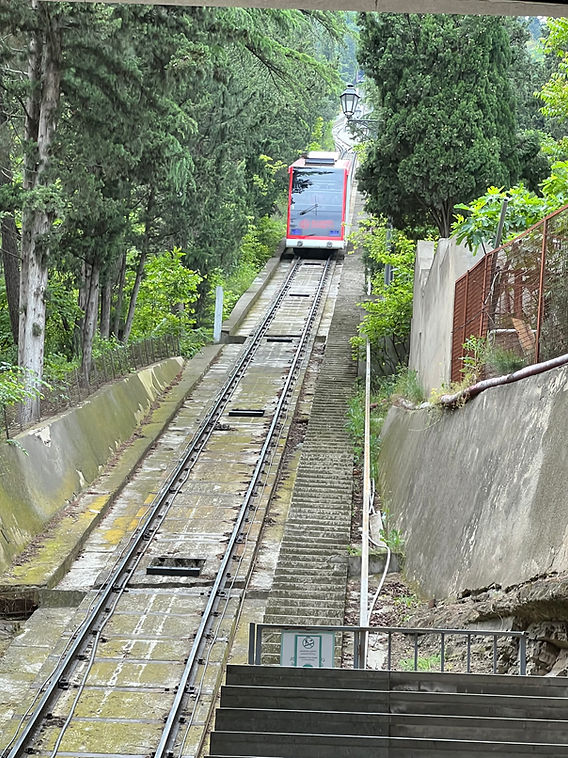
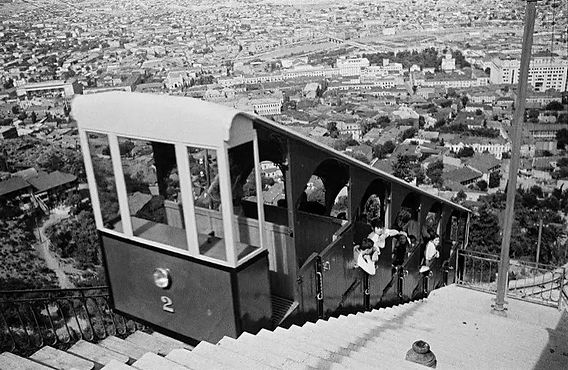
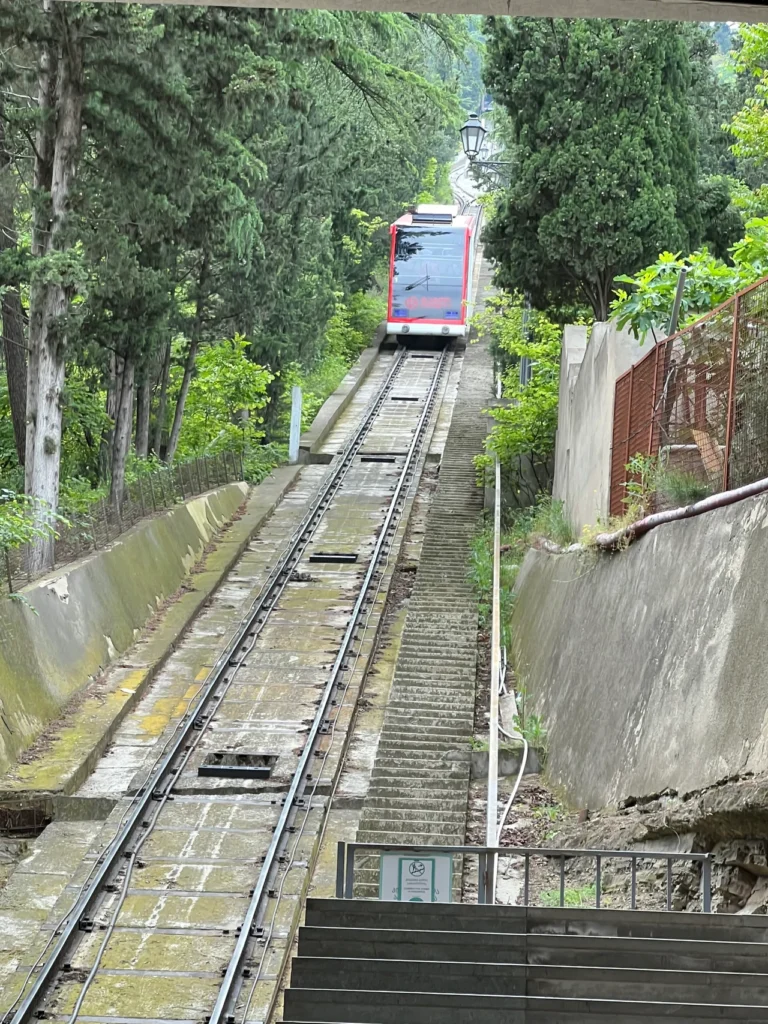
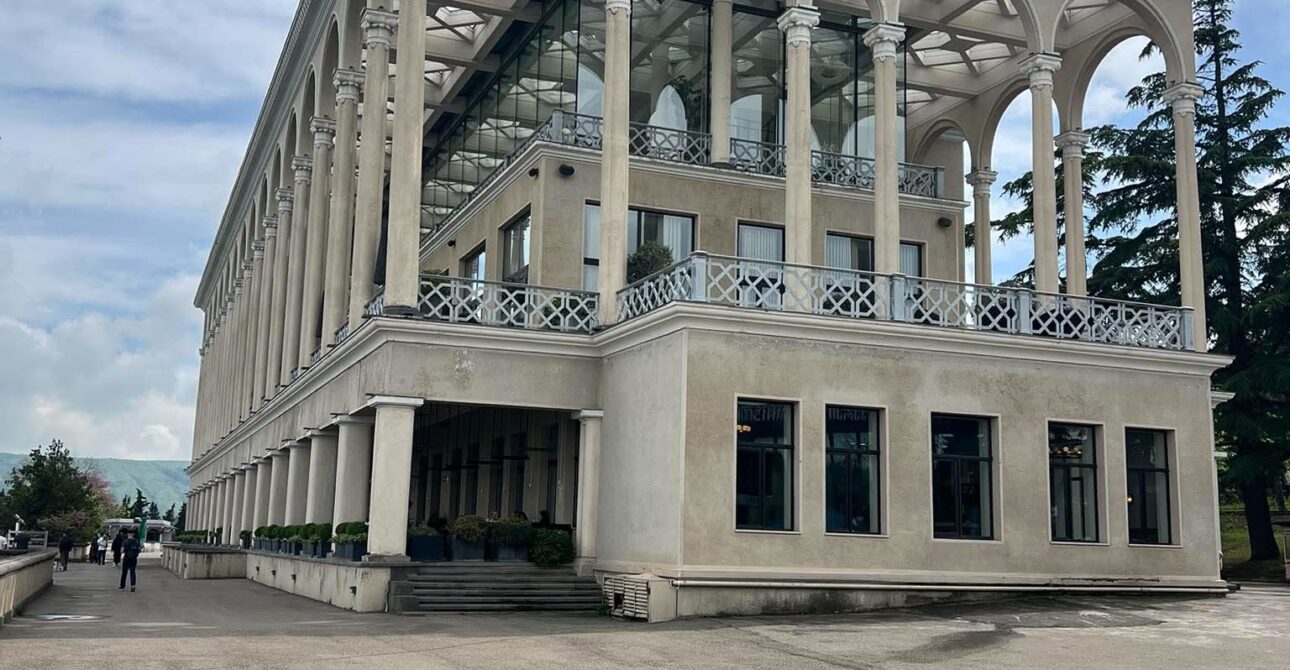
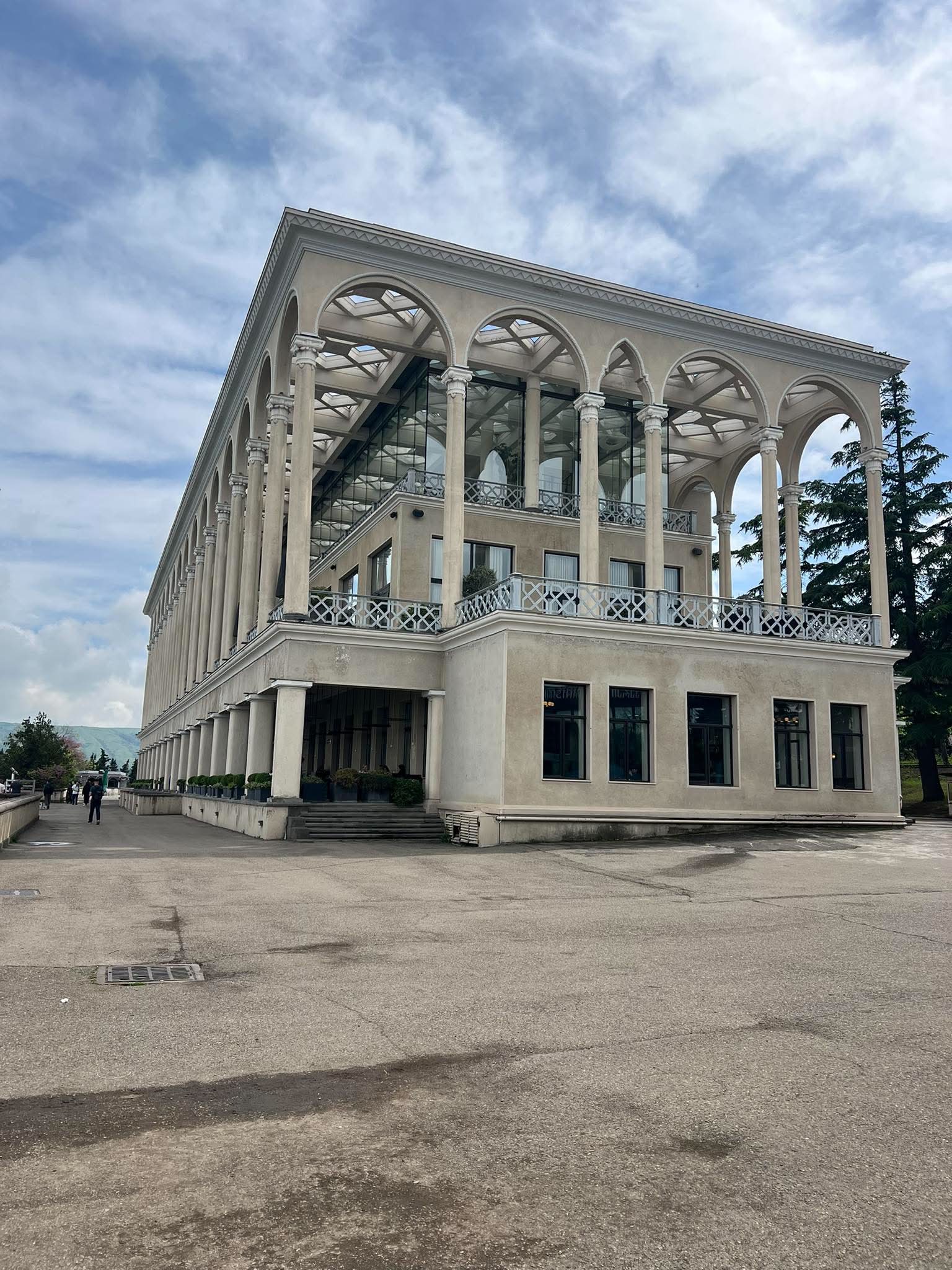
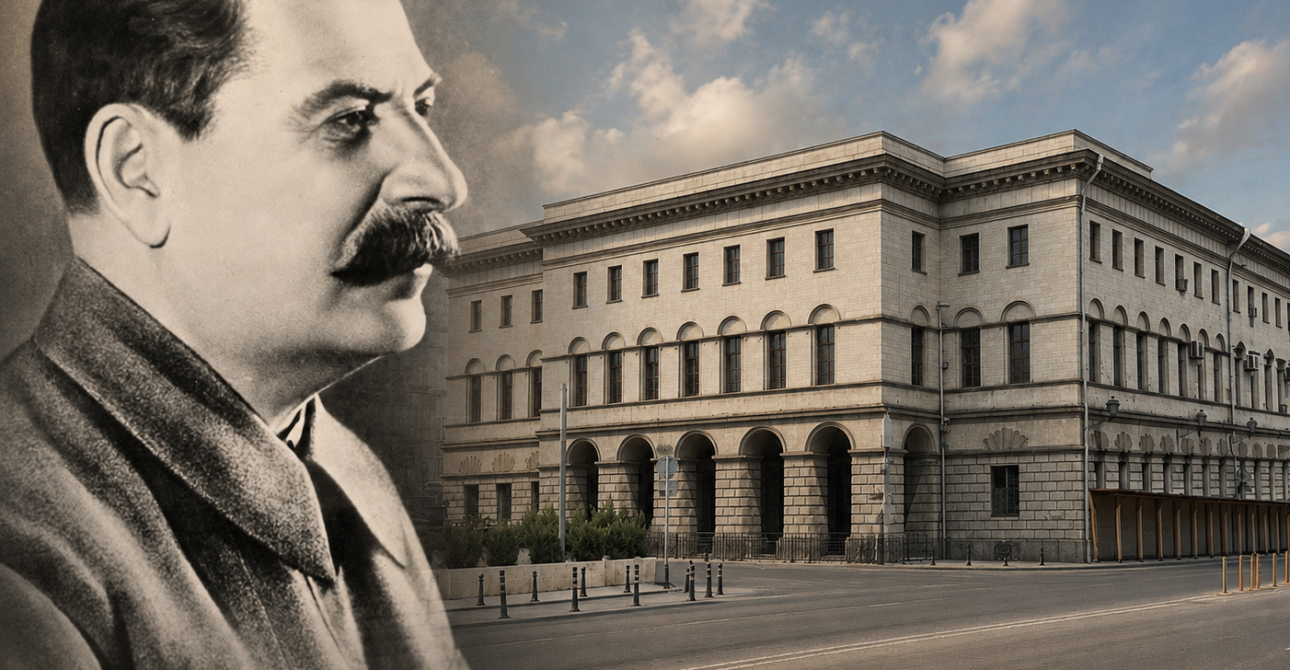
One of my favorite stories is connected to the famous Funicular Restaurant, located on top of Mtatsminda Mountain and visible from almost every corner of central Tbilisi. The building was constructed between 1936 and 1938 by Georgian architects. The project was carried out under the personal supervision of Lavrentiy Beria, who personally attended the restaurant’s grand opening in 1938.

Funicular restaurant Tbilisi

Now let’s move to the main story.

In 1962, during the leadership of Khrushchev, the world entered one of the most dangerous moments of the Cold War — the Cuban Missile Crisis. The Soviet Union secretly deployed nuclear missiles to Cuba, bringing the world dangerously close to nuclear war. Eventually, the Soviet Union and the United States reached an agreement, and Moscow agreed to remove the missiles from Cuba without consulting Castro. This decision created serious tension between the Cuban and Soviet Castro

Castro and Khrushchev In Georgia

In 1963, Castro arrived in the Soviet Union, the goal of visiting is to reconcile, later he and Khrushchev traveled south to Sochi. From there, they continued by train to Tbilisi, where the local communist leadership welcomed them with great honor. During the visit, they were hosted at what was considered the finest restaurant in Tbilisi — the Funicular Restaurant, which still operates today.

According to local stories, Castro especially loved smoked sulguni cheese, and after leaving Georgia he reportedly took several pieces back to Cuba with him.

Over the decades, the restaurant has hosted many famous guests, including Raj Kapoor, 1954 Indira Gandhi 1976, Margaret Thatcher 1887 Today, the Funicular Restaurant remains not only one of Tbilisi’s most landmarks, but also a place connected to fascinating stories from the Cold War era.

Mukhran Guliashvili

Used sources:

1.https://kvirispalitra.ge/article/32531-qarthveli-qalis-silamazith-aghtacebuli-komunizmis-ukanaskneli-mebairaghis-fidel-kastros-ckhovreba-da-sikvdili-fotogalerea/

2.https://www.radiotavisupleba.ge/a/kastros-mogzauroba-sakartveloshi/28152242. 

3.https://www.ambebi.ge/article/231045-raj-kapuris-sakartveloshi-vizitis-akamde-ucnobi-kadrebi-kaxetshi-rtvelshi-moilxina/ 

4.https://youtu.be/UW0xfMH8Sco?si=hSY_mhBi4fir5ip 

Georgians Who Contributed to the U.S. Military 

Georgians Who Contributed to the U.S. Military 

This blog explores the historical connections between Georgia and the United States by highlighting prominent individuals of Georgian origin who made significant contributions to the development of the U.S. military and aviation.

Alexander Kartvelishvili

— Pioneer of American Military Aviation

Alexander Kartveli (born Aleksandre Kartvelishvili in 1896 in Tbilisi) was a pioneering aeronautical engineer whose work had a lasting impact on American military aviation.

From an early age, he showed a strong interest in engineering and aviation. After studying at a military academy in Georgia, he was sent in 1919 by the government of the First Georgian Republic to France, where he enrolled at ISAE-SUPAERO, one of the leading aeronautical engineering schools in Paris. He graduated in 1922 with a degree in aeronautical engineering.

Following the Soviet occupation of Georgia in 1921, Kartveli was unable to return to his homeland. In 1927, he emigrated to the United States, where his career reached its full potential.

Soon after his arrival, he met the renowned engineer Alexander P. de Seversky, also originally from Tbilisi. Seversky invited him to join his aviation company, marking the beginning of a highly productive collaboration.

Together, they developed several advanced aircraft, including the Seversky P-35 and SEV-3, which achieved world speed records in the 1930s. After Seversky’s departure from the company, Kartveli became vice president and chief designer.

During World War II, he designed one of the most iconic American fighter aircraft — the Republic P-47 Thunderbolt.

His major aircraft designs include:

  • Republic P-47 Thunderbolt — one of the most powerful U.S. fighter aircraft of World War II
  • F-84 Thunderjet
  • F-105 Thunderchief

Some of these aircraft remained in service for decades, shaping the evolution of modern military aviation. Kartveli spent the rest of his life in the United States and died in 1974 in New York City. He is buried at Ferncliff Cemetery in Hartsdale, New York. He had no descendants.

Alexander Kartvelishili

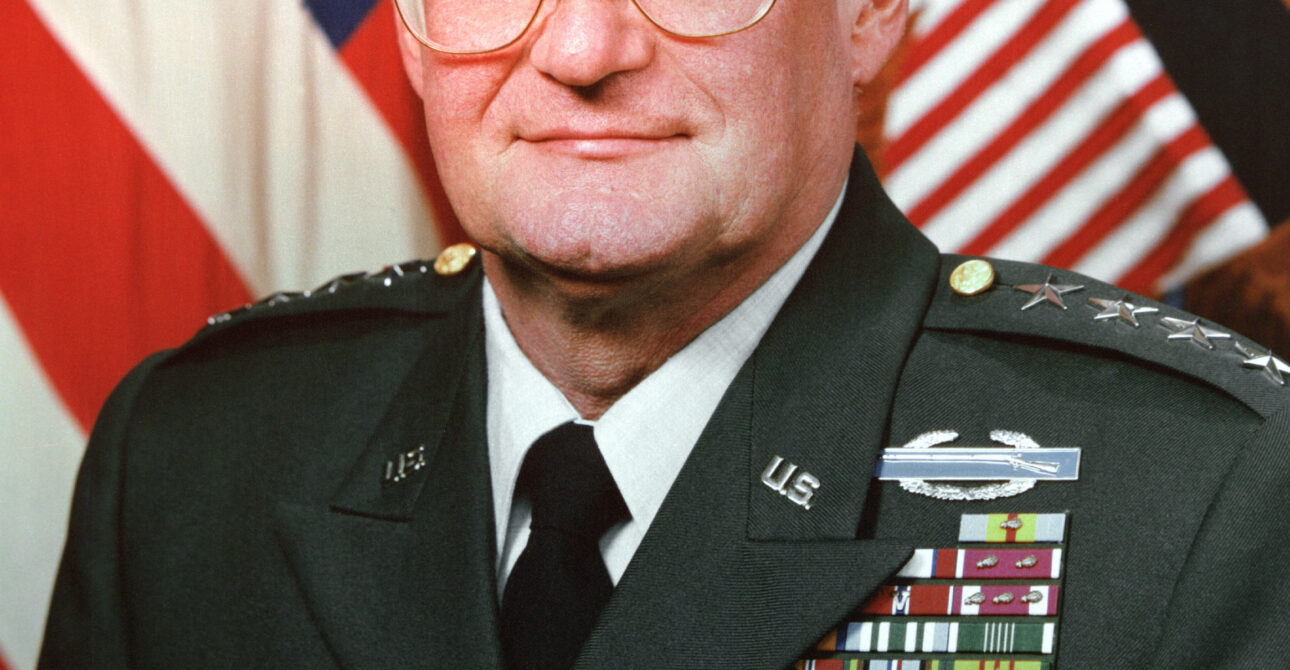
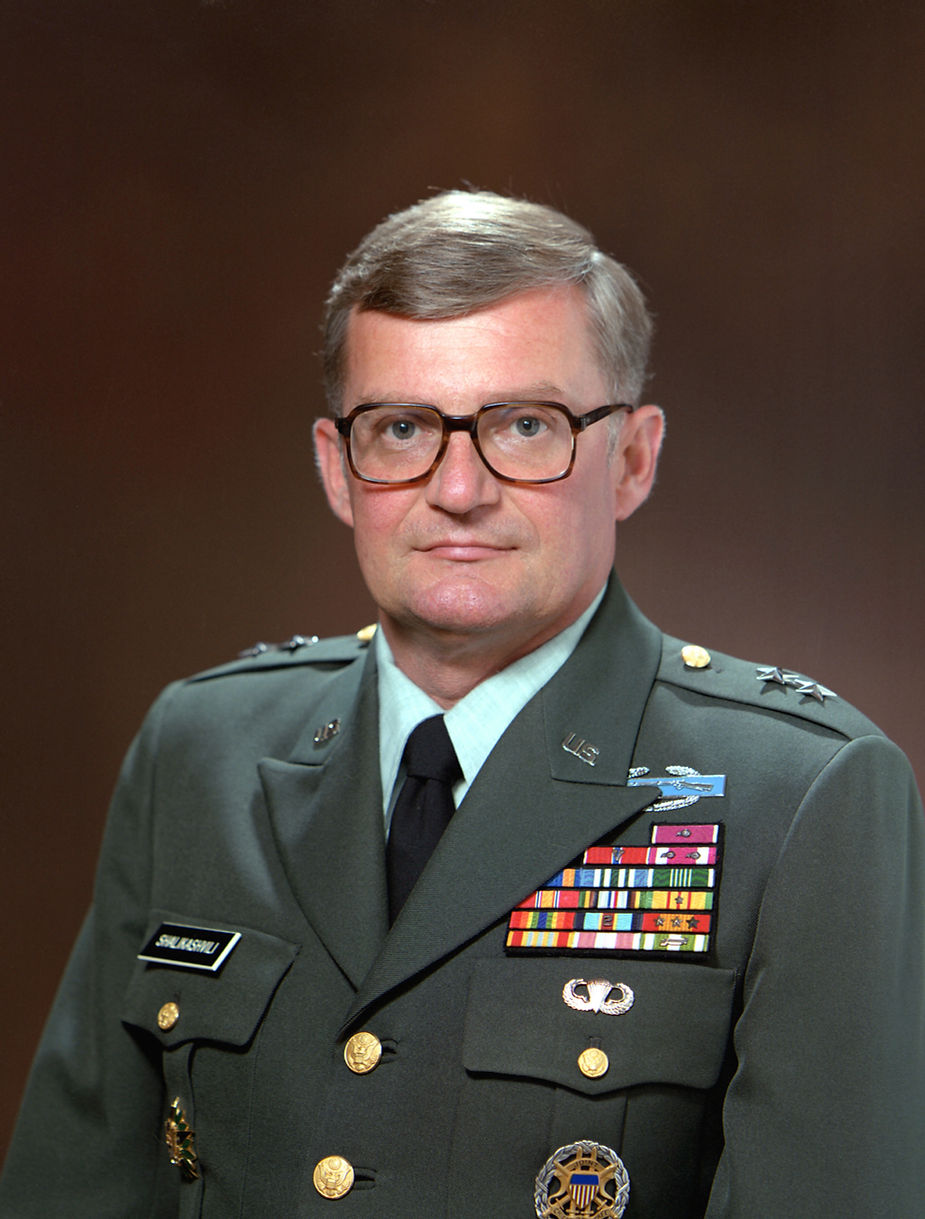
John Shalikashvili

— Chairman of the U.S. Joint Chiefs of Staff

John Shalikashvili came from an aristocratic Georgian family originating in the Gurjaani region of Kakheti. His father, Dimitri Shalikashvili, served as an officer in the Imperial Russian Army and later in the military forces of the Georgian Democratic Republic.

Following the Soviet occupation of Georgia in 1921, the family emigrated to Poland, Dimitri merried to Polish lady, John Shalikashvili was born in Warsaw in 1936.

During World War II, the family experienced displacement in Europe. After the war, they immigrated to the United States in 1952, settling in Peoria, Illinois.

Shalikashvili graduated from Bradley University with a degree in civil engineering and later earned a master’s degree in international relations from George Washington University. In 1958, he became a U.S. citizen and voluntarily joined the U.S. Army.

He served with distinction, including deployment during the Vietnam War, and steadily rose through the ranks to become a four-star general.

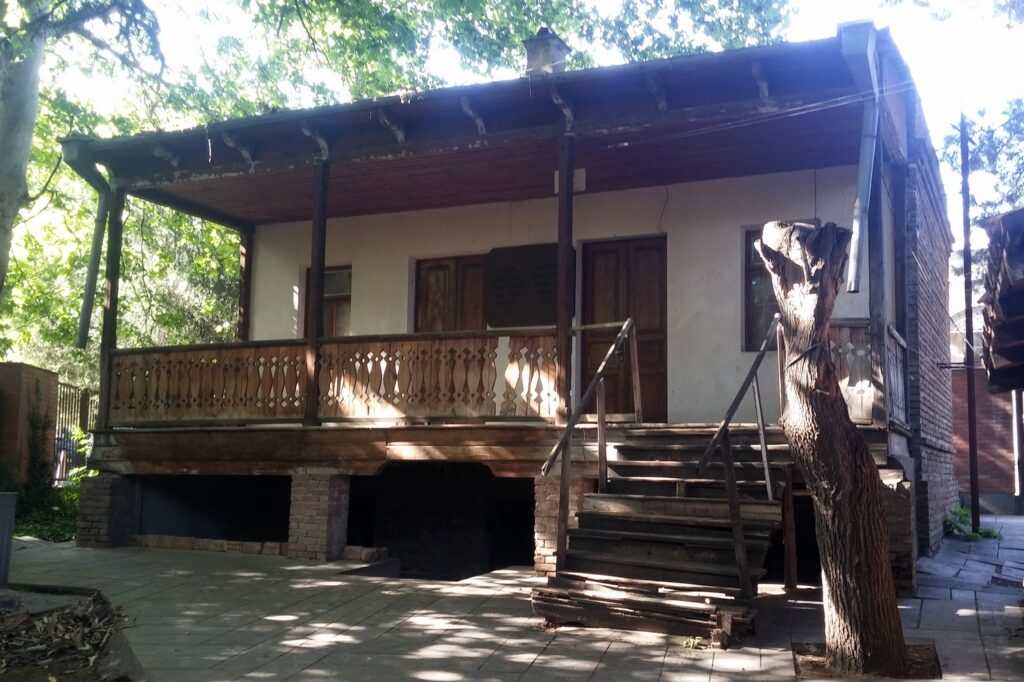
House in Gurjaani where General’s father lived

In 1993, President Bill Clinton appointed him Chairman of the Joint Chiefs of Staff, making him the first foreign-born officer to hold the highest military position in the United States Armed Forces.

Prior to this, he served as Commander of U.S. European Command (EUCOM) and Supreme Allied Commander Europe (SACEUR) within NATO.

Despite frequent challenges with the pronunciation of his surname, he retained his Georgian identity throughout his life. He also contributed to strengthening cooperation between the United States and Georgia in military development during the post-Soviet period.

John Shalikashvili 4 star USA General

Georgian Contributions in Modern Military Missions

Georgia has also made significant contributions to modern international operations. During participation in NATO-led ISAF and Resolute Support missions in Afghanistan, the country paid a heavy price:

  • 32 Georgian service members were killed
  • Hundreds were wounded or injured

These sacrifices highlight Georgia’s long-standing commitment to international security and cooperation.

Mukhran Guliashvili

used sources

1.https://youtu.be/mwWSh40Zd8Y?si=Om36YHHUMtvC7iB1

2.https://youtu.be/wLeTKAAmmGM?si=eAQpA17GFKU5ZJXi 

3.https://kvira.ge/904251

Faits inspirants sur les liens historiques entre la France et la Géorgie

Faits inspirants sur les liens historiques entre la France et la Géorgie

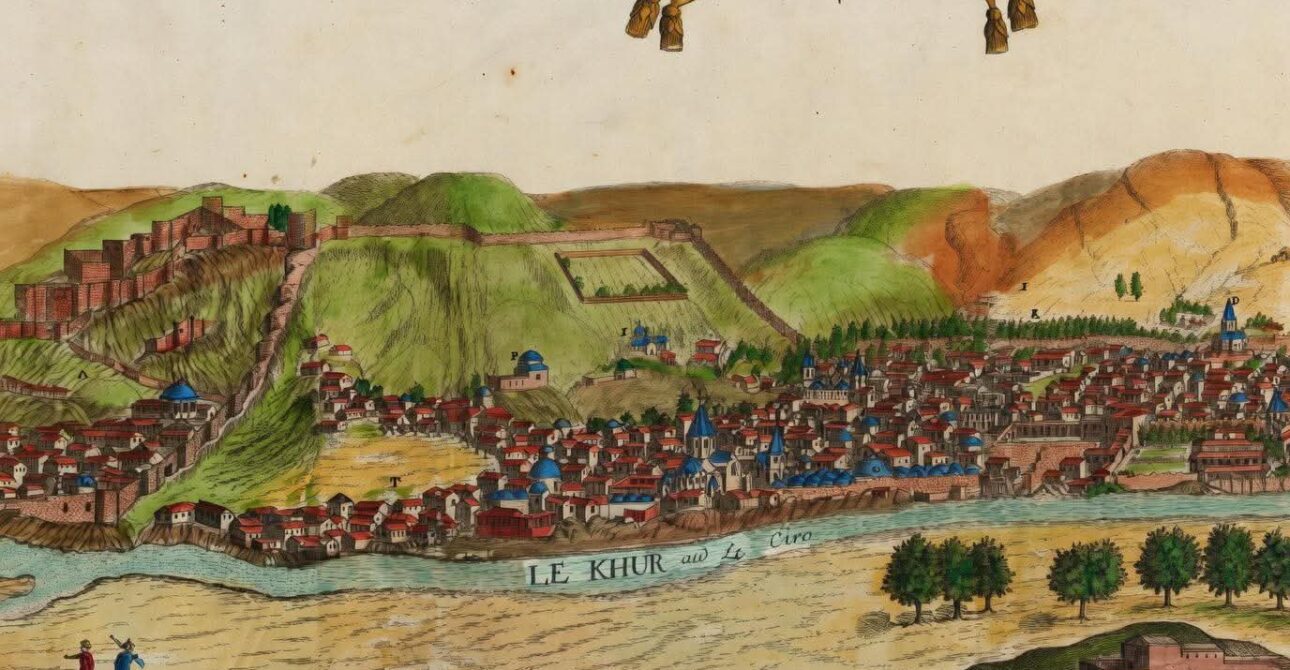
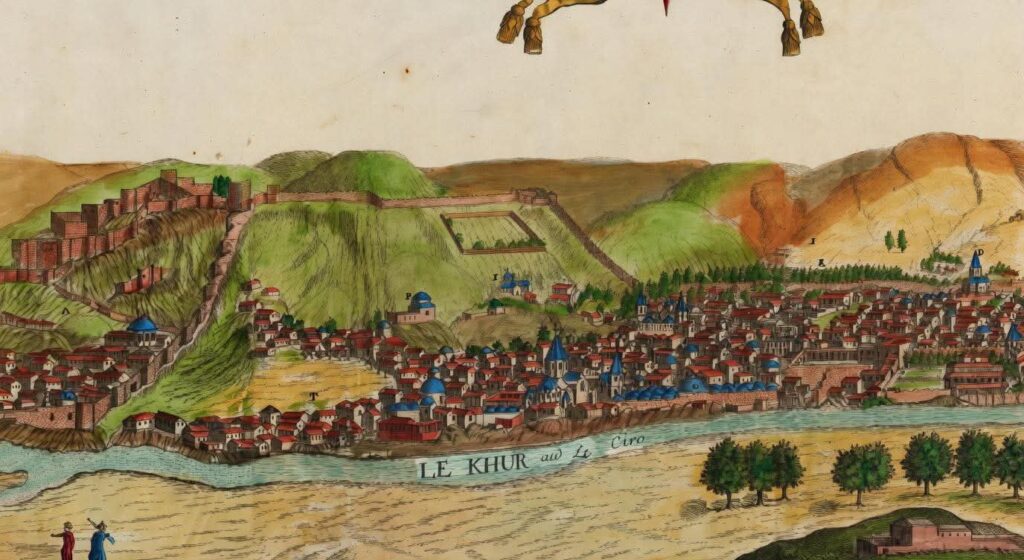
  1. La première représentation visuelle de la ville de Tbilissi appartient au voyageur français Jean Chardin. Né à Paris dans une riche famille de marchands, il voyagea à travers la Géorgie dans les années 1670 en route vers la Perse. Il écrivit plus tard un ouvrage remarquable sur son voyage de la mer Noire à Tbilissi. Plus important encore, il réalisa les premières représentations visuelles de la ville à une époque où la photographie n’existait pas, nous donnant ainsi une idée de l’aspect de Tbilissi au XVIIe siècle. Aujourd’hui, une rue de Tbilissi porte son nom — la rue Chardin.
  2. Le célèbre écrivain français Alexandre Dumas voyagea en Géorgie en 1858–1859. Il entra depuis l’Azerbaïdjan par Lagodekhi, y séjourna environ deux mois, puis quitta le pays par Poti. Il admira profondément la Géorgie et décrivit avec vivacité sa vie culturelle dans son livre Le Caucase, dont une grande partie est consacrée à Tbilissi. Il apprécia particulièrement les bains sulfureux, qu’il fréquenta souvent, ainsi que l’opéra.
  3. Roustam Raza, proche associé de Napoléon Bonaparte, était originaire de Tbilissi. De plus, le beau-frère de Napoléon, Joachim Murat, était marié à une femme d’origine géorgienne.
  4. La France fut l’un des rares pays à soutenir militairement la Première République démocratique de Géorgie (1918–1921). Les forces navales françaises bombardèrent même les positions bolcheviques avançant depuis l’Abkhazie.
  5. Après la chute de la Première République, le gouvernement géorgien s’exila en France et s’installa au domaine géorgien de Leuville-sur-Orge. Leurs tombes s’y trouvent encore aujourd’hui.
  6. La 5e présidente de la Géorgie, Salomé Zourabichvili, est née en France et descend d’un ministre du gouvernement de la Première République. Le rêve de sa famille était de revenir en Géorgie.
  7. Lorsque la Géorgie s’est qualifiée pour la première fois au Championnat d’Europe de l’UEFA, l’équipe nationale était entraînée par le Français Willy Sagnol.

Mukhran Guliashvili

Legacy of German Architecture’s in Georgia’s Capital

Legacy of German Architecture’s in Georgia’s Capital

Germany holds a special place in Georgian history. It is such a broad and rich topic that not just one blog—or even one or two books—would be enough to cover it fully. Still, I will try to summarize a few stories that may be interesting not for historians or researchers, but for first-time visitors from Germany who come to Georgia as tourists. After hiking in the mountains, they may want to learn a bit more about the history of the city and the country they are discovering.

Of course, no visitor can avoid Rustaveli Avenue. Walking along it is a pleasant experience. Before moving to the main subject, it is worth repeating that Germany has always been a very special country for Georgia—consistently in a positive way throughout our history.

It all began in 1817, when the first group of German Swabians from Württemberg arrived in Georgia and founded settlements in Tbilisi and other towns. The reasons for their migration were varied, including religious and economic factors, though I will not go into detail here. Since 1801, Georgia had been part of the Russian Empire, and the emperor promised favorable conditions to settlers. Initially, around 3,000 Germans lived across different regions of Georgia, including Tbilisi. They brought elements of European culture with them—beer-making traditions, potatoes, and even cow’s milk, while Georgians had traditionally preferred buffalo milk and related products.

In the 1930s, during the Soviet period and around the time of World War II, approximately 23,000 Germans were deported from Georgia to Central Asia and Siberia.

This brief background helps us move toward the main topic. It may come as a surprise that there are very few capitals in the world where a central avenue was largely shaped by German architects—and Tbilisi is one of them.

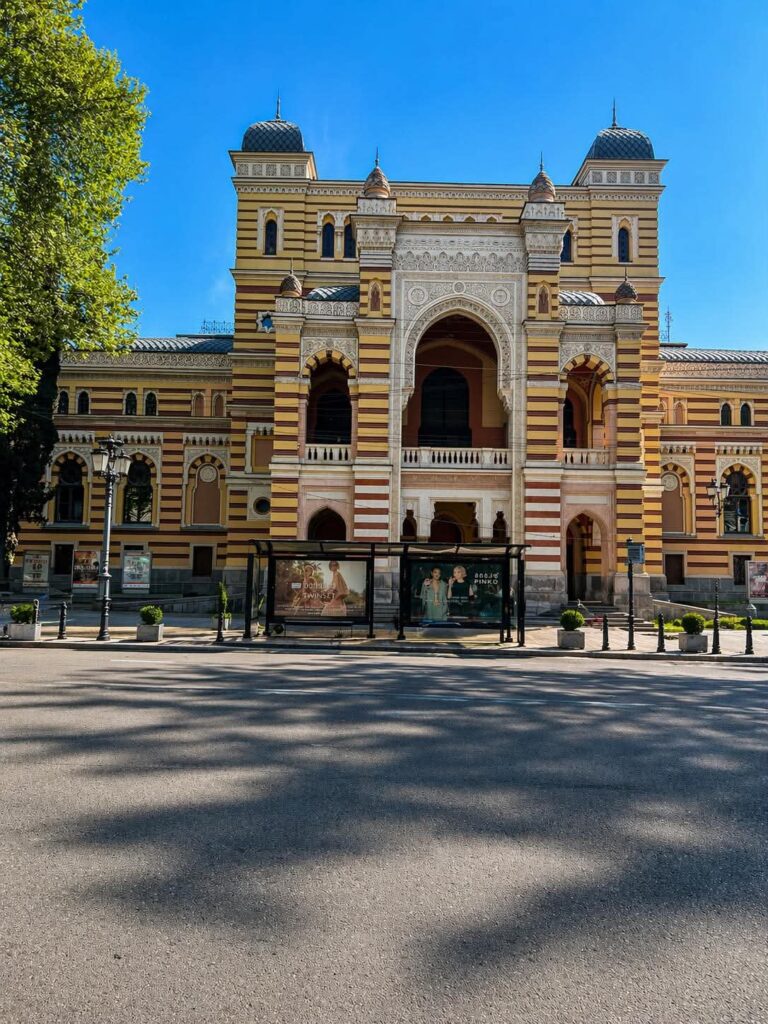
One of the first impressive buildings you will see is the Tbilisi Opera House, rebuilt in 1896 by the architect Viktor Johann Gottlieb Schröter (1839–1901). His parents migrated from Wittenberg to St. Petersburg. He graduated from the Academy of Arts in St. Petersburg and also studied in Berlin. From the 1860s, he worked in Tbilisi and is best known for his work on the opera house.

Let’s take a walk along Rustaveli Avenue, from Rustaveli Metro Station to Liberty Square.

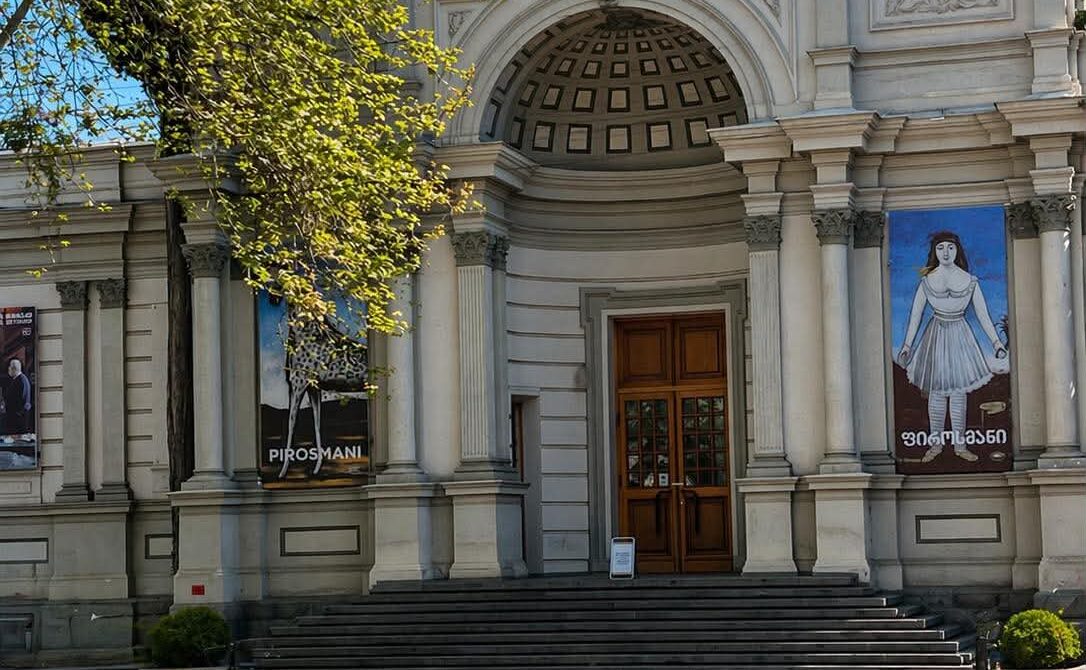
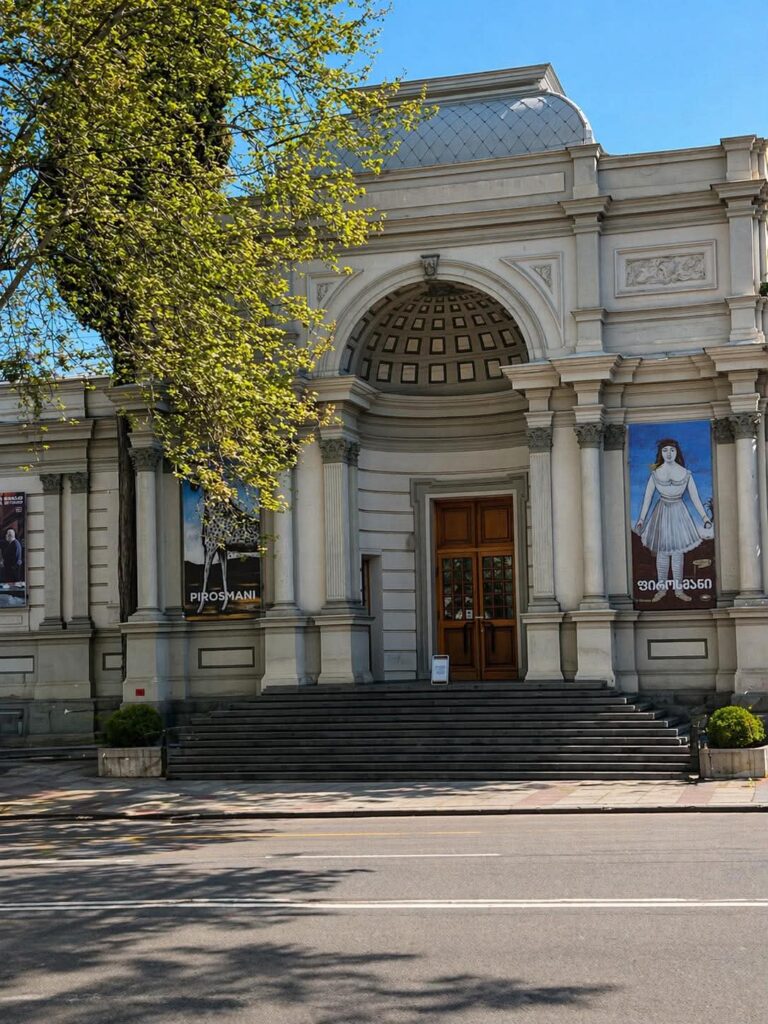
As you continue walking, you will encounter another notable building designed by the German architect Albert Salzmann (1833–1897). He was born in Tbilisi into a Swabian migrant family and studied at the Academy of Arts in St. Petersburg. Salzmann designed many distinguished buildings in Tbilisi. He was buried in the German Lutheran cemetery in Kukia, which unfortunately no longer exists. One of his works is the former Caucasus Military Museum, today the National Gallery (Rustaveli Avenue #11).

Directly opposite the National Gallery stands another impressive building—Tbilisi’s First Classical Gymnasium (Rustaveli Avenue #10), designed by Otto Jakob Simonson. He was born in Dresden in 1829 and worked in Tbilisi from 1859 to 1909. He designed many significant buildings, including churches and private residences for wealthy Tbilisi families. In 1909, he moved to Riga, where he passed away in 1914.

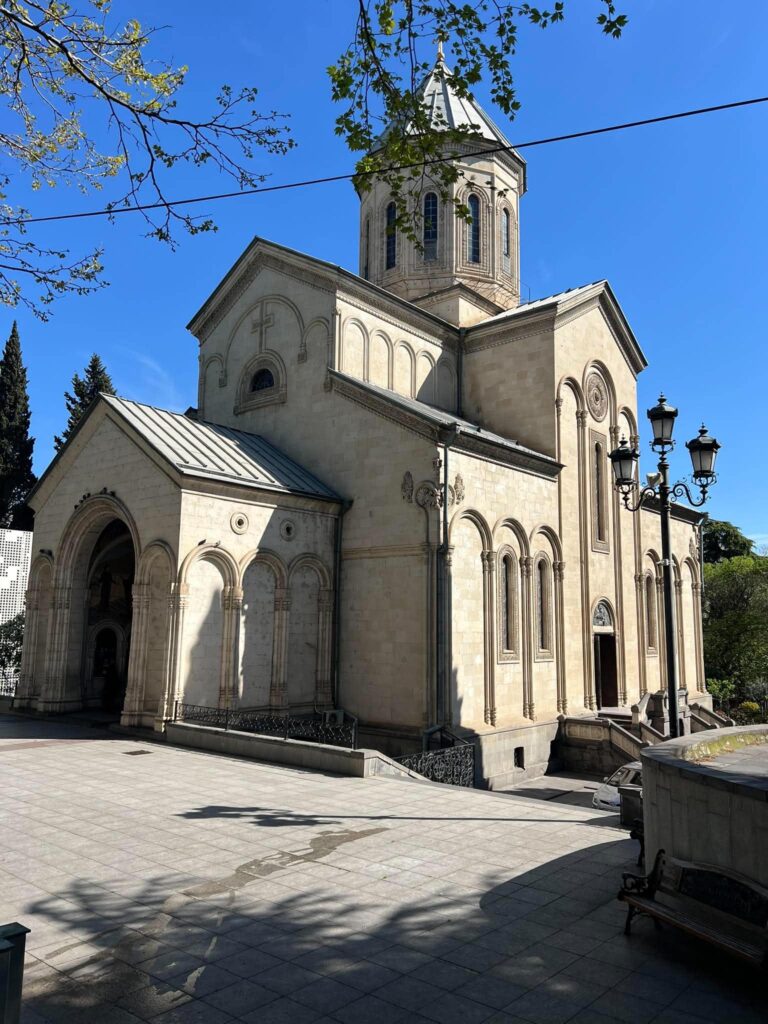
At Rustaveli Avenue #9 stands Kashveti St. George Church, designed by Albert Salzmann and Otto Simonson.

Further along, the former Viceroy’s Palace (today the National Youth Palace, Rustaveli Avenue #6) was redesigned by Otto Simonson in 1870–71, who gave the building its current façade.

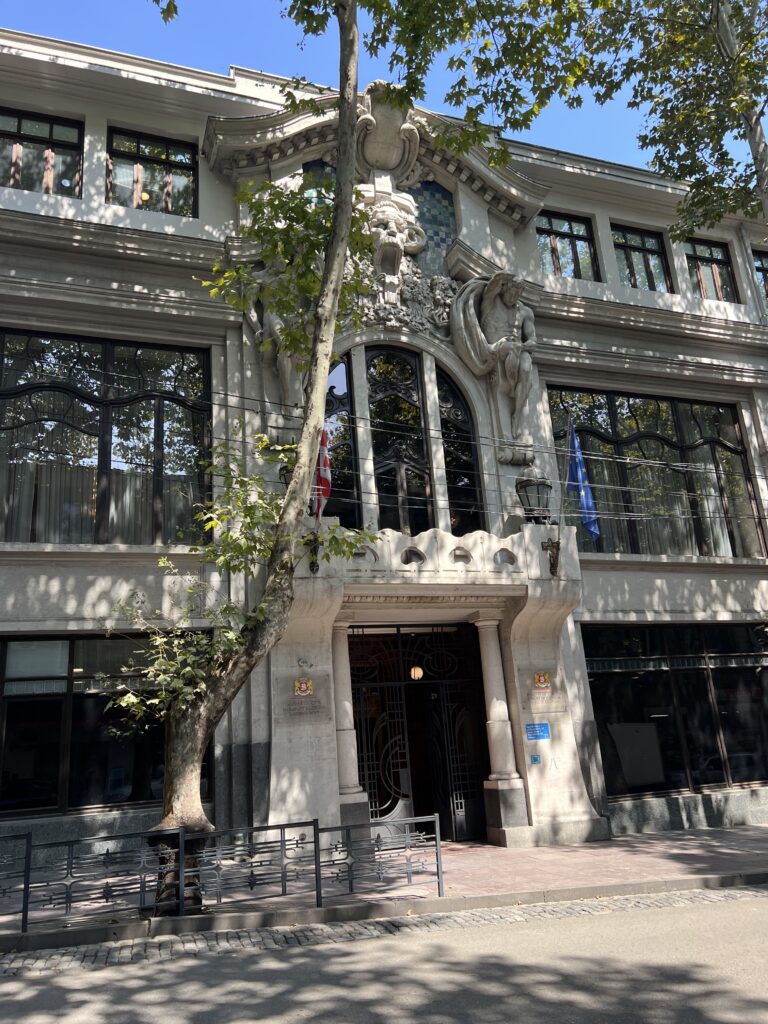
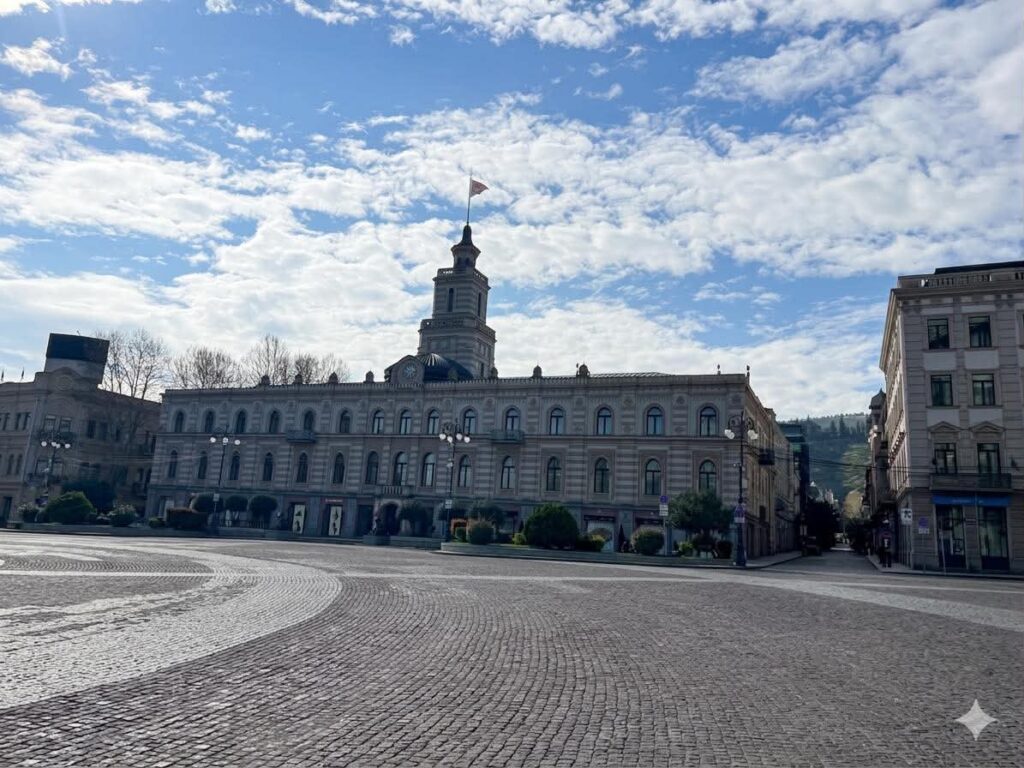
Finally, at Liberty Square, the current Tbilisi City Council building was redesigned by the German architect Paul Stern. He added a third floor to the central part of the building, giving it a stepped silhouette. He also replaced the existing fire tower with a taller, gazebo-like Rathaus tower crowned with a clock. The façade was decorated with Moorish elements according to his design.

What I have described above is mostly focused on the 19th century, but Germans also have many important stories in 20th-century Georgia, which I will continue exploring in another blogs

Mukhran Guliashvili

Used sources

https://german-georgian.archive.ge/ka/blog/62.

https://kvira.ge/598293

https://www.tbilisiarchitecture.net/ka/tbilisis-german-settlements/

https://german georgian.archive.ge/ka/blog/16

https://blueshield.ge/?p=6433&lang=ka

https://um.ge/news/tbilisis-germanuli-arqiteqtura

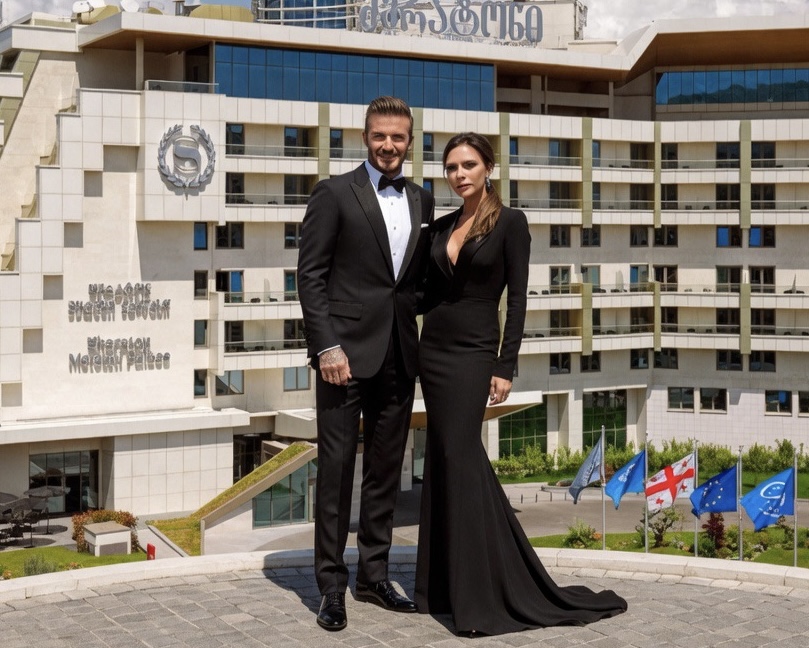
What connects David and Victoria Beckham to one of the 5★ hotels in Tbilisi?

What connects David and Victoria Beckham to one of the 5★ hotels in Tbilisi?

have been a tour guide in Tbilisi since 2016. I also graduated from the Faculty of History at TSU. Tbilisi is a city that constantly surprises you. When I guide tours, I naturally share my knowledge with my guests, but in my free time I continue learning more and more. Tbilisi is full of interesting and inspiring stories. Every day we discover something new. Most of these stories are connected to famous writers, travelers, and historical figures who are no longer around.

In this blog, I want to share a story that I am sure will surprise many of you. It is connected to the famous English football star David Beckham and his wife, pop star Victoria Beckham.

This moment happened in Tbilisi. In one of his interviews with 1TVSPORT, Beckham recalled:

“It was November 1996. I was sitting in a hotel room. The next day we were supposed to play against the Georgian national team in a World Cup qualifying match. Gary Neville was lying on the next bed. Apart from matches, I don’t really like traveling and going away. In reality, you don’t see anything—you just live in a monotonous routine that becomes boring: you eat, you sleep, and you train. You spend all your time in rooms that all look very similar.

The hotel where the England national team was staying had been opened after the collapse of the Soviet Union and was the only hotel in Georgia at the time that met international standards. The interior was arranged in a circular layout, overlooking the lobby, bars, and restaurants.

From your room, you could see the door of the opposite room. Everything was made of metal and glass. From my window, I could see a half-finished highway along which a gray river sluggishly flowed. It was definitely not a landscape that would make you want to go outside in the evening.

In short, Gary Neville and I were sitting in the room talking. In the corner, a television was on, tuned to a music channel. A new Spice Girls video began—‘Say You’ll Be There.’ They were dancing in a desert; Posh (Victoria Adams) was wearing a black catsuit. I was watching and realized I had never seen such an extraordinary woman before.

But that evening, in the stuffy hotel room, something clicked in my mind for the first time. Victoria was fantastic, and I realized I somehow had to find a way to her. Clearly, I would need Lawrence of Arabia’s outfit. I would somehow also need to find a camel.

‘She’s so beautiful… I love her. Gary, I have to meet this girl.’

Neville probably thought I had gone mad. Even though we spent a lot of time together, Gary had never seen anything like this—I had fallen in love with a pop star I only knew from television. And now that was exactly what had happened—Victoria had taken my heart.”

of course you are interesting which hotel was it , it was Sheraton hotel Tbilisi

Mukhran Guliashvili

source:https://1tv.ge/news/1996-wlis-noemberi-tbilisi-devid-beqhemisa-da-viqtoria-adamsis-siyvarulis-istoria-saqartveloshi-daiwyo-1tvsport/

What Americans Should Know When Visiting Georgia? 🇺🇸🇬🇪

What Americans Should Know When Visiting Georgia? 🇺🇸🇬🇪

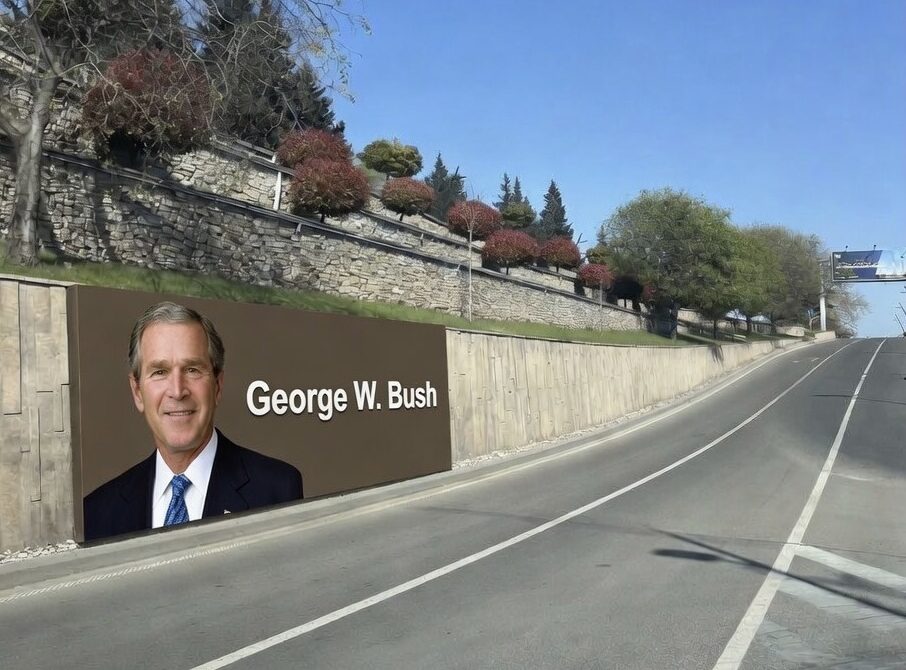
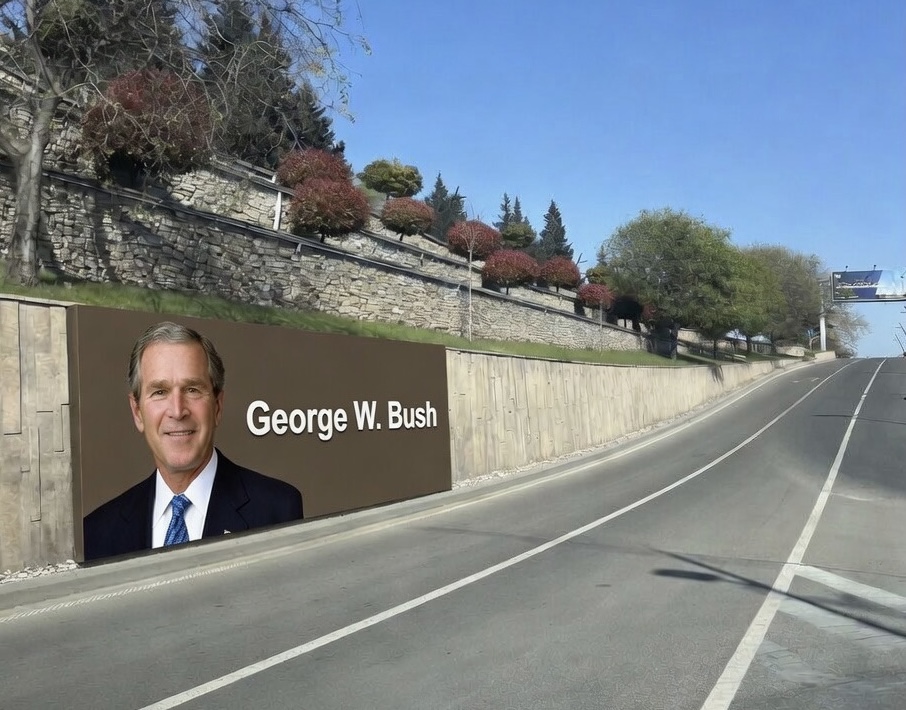
1. George W. Bush Street in Tbilisi
Many Americans—even those who live in Georgia or have visited—are not aware that the country is one of the few in the world with a major street named after George W. Bush. This avenue is part of the main highway connecting Tbilisi International Airport to the city center.


2. A Unique Presidential Visit
George W. Bush remains the only sitting U.S. president to have visited Georgia (in 2005). During his visit, he famously enjoyed traditional Georgian cuisine such as khinkali and eggplant with walnuts, and even tried a bit of Georgian dancing.
His strong support during the Russo-Georgian War is still remembered in Georgia, and his role is one of the reasons why a street in Tbilisi was named after him.

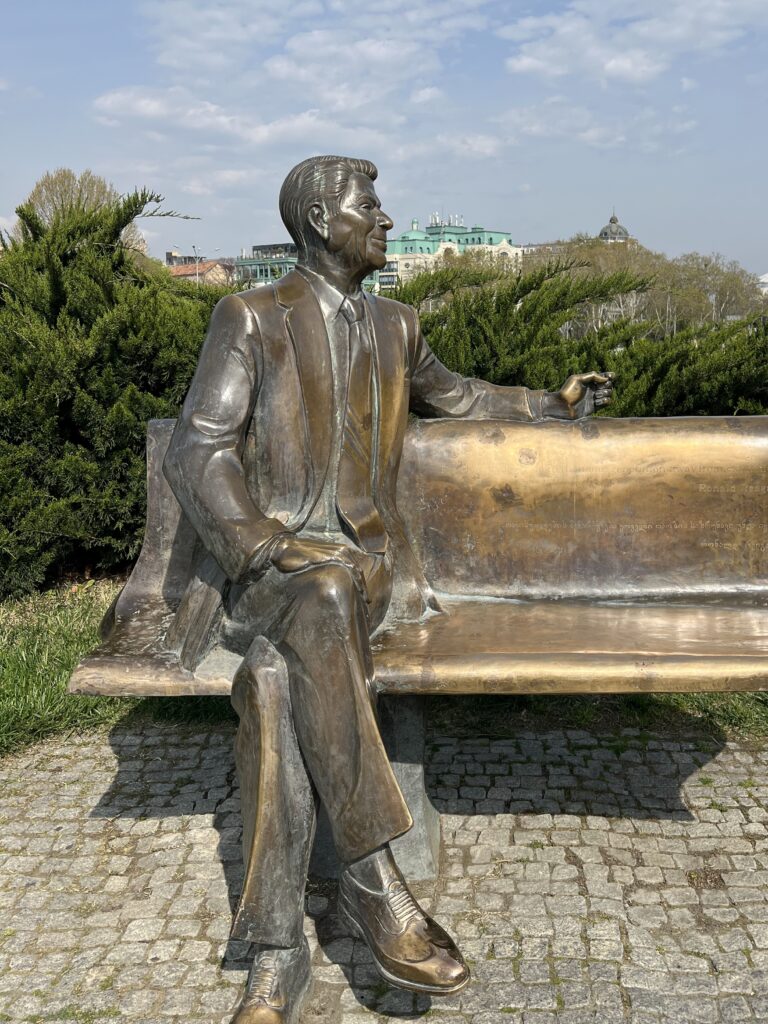
3. Ronald Reagan Monument in Tbilisi
There is a monument to Ronald Reagan in Rike Park, opened in 2011. He is widely associated with policies that contributed to the end of the Cold War and the eventual collapse of the Soviet Union, which led to Georgia’s independence.

4. Georgia in Afghanistan
Georgia was one of the largest contributors per capita to the mission in Afghanistan, deploying around 4,000 soldiers at its peak. This demonstrated Georgia’s strong commitment as a U.S. partner.

5. Donald Trump and the Batumi Project
Donald Trump visited Georgia in 2012. At the time, a major investment project—Trump Tower in Batumi—was planned. However, after political changes in 2013, the project was canceled.

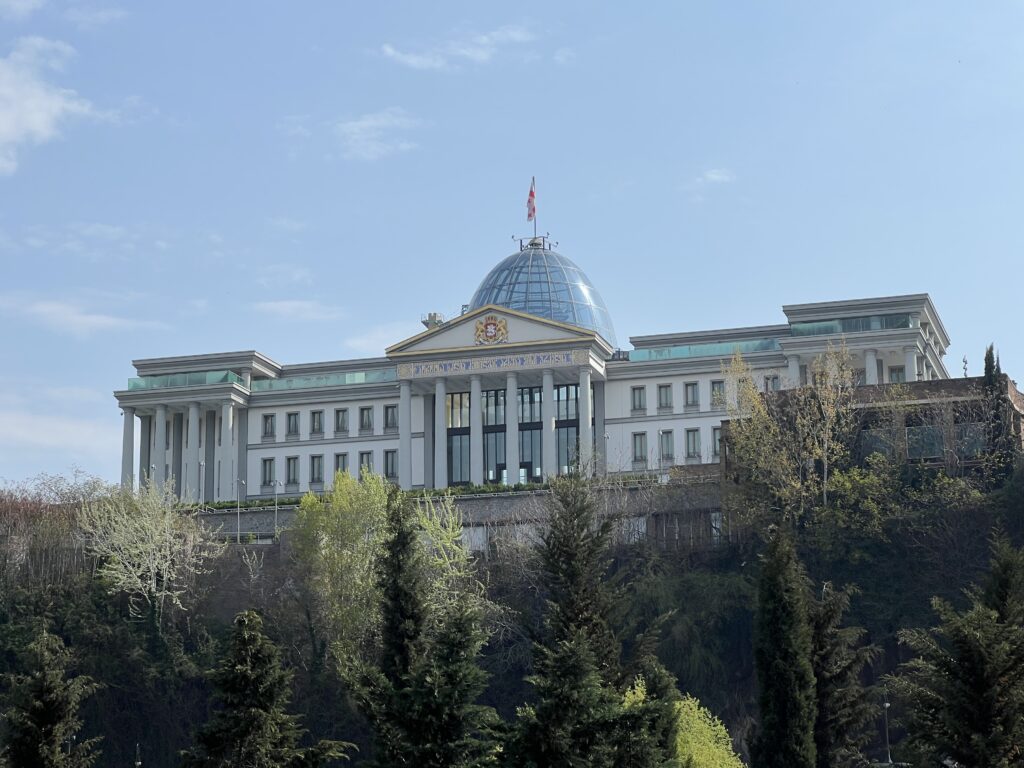
6. Presidential Palace and the White House Comparison
The Presidential Palace of Georgia, located in the Avlabari district, was officially opened in 2009 during the presidency of Mikheil Saakashvili. The building has some visual similarities to the White House and is clearly visible from the Bridge of Peace.

Mukhran Guliashvili
The Story of  Norwegian Nobel Prize Laureate Knut Hamsun in Tbilisi

The Story of Norwegian Nobel Prize Laureate Knut Hamsun in Tbilisi

As part of my blog series about people who built connections between Georgia and their home countries, today I want to talk about the Norwegian writer Knut Hamsun (born 1859 in Lom, Norway), a Nobel Prize laureate, who traveled to Georgia in 1899 with his wife.

Hamsun traveled under various names to avoid attention. Rather than spending time with the elite, he wanted to experience ordinary Georgian life, meet local people, and immerse himself in the country. He fell in love with Georgia, and his impressions were later recorded in his book In a Fairy‑tale Land: Experienced and Dreamt.

Hamsun, a well-traveled man who often disliked the countries he visited, made an exception for Georgia. He even expressed a wish to spend his final days there.

The Route and Impressions

He first arrived via Dariali, from Russia into Kazbegi. He was immediately captivated by the view of Mount Kazbek:

“At a sharp bend in the road, on the right side, a valley suddenly opens before the eyes, and very close appears Kazbegi with its glacier shining in the sun. Tall, stern, and silent, it astonishes us with its power. We are filled with an indescribably overwhelming feeling: this is a completely different world, where Kazbegi, surrounded by mountains bound by an oath of loyalty, looks down upon us from above…

This country does not resemble any other country I know, and I am filled with the feeling that I would gladly spend my whole life living here.”

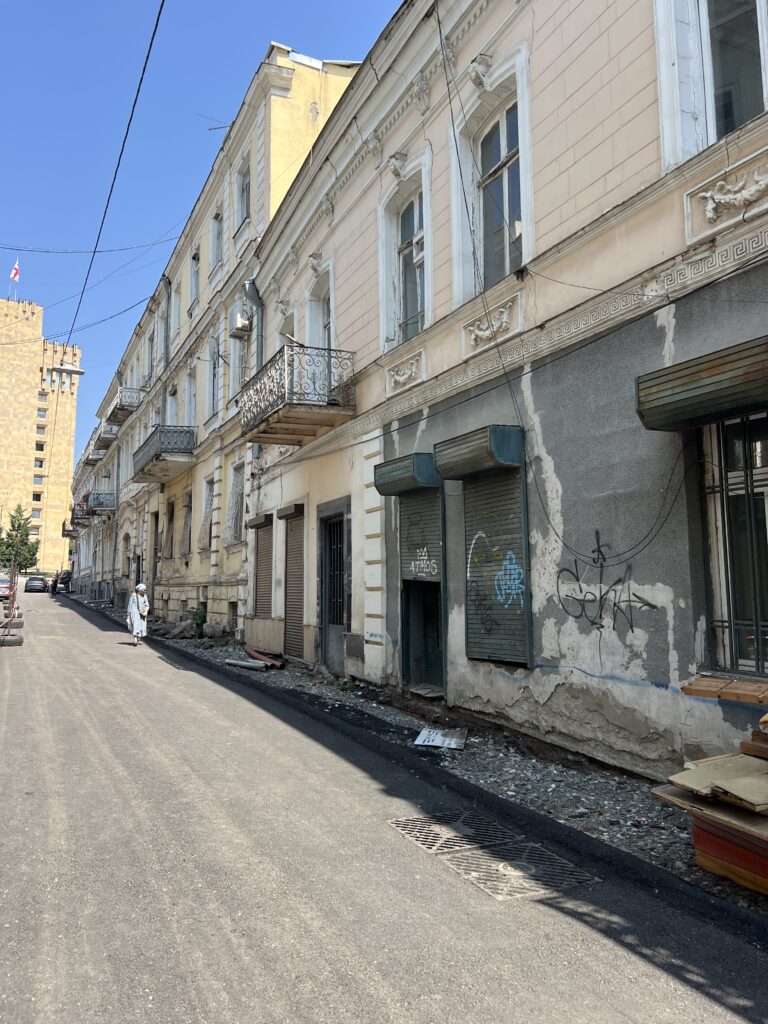
Afterward, he continued to Tbilisi, where he stayed at the London Hotel, the city’s finest at the time. Built in 1875 by German architect Richter and managed by his daughter, it was a private hotel until the Soviet era, when it became a police building. Today, the building still stands on Atoneli Street.

Former hotel London Tbilisi

In Batumi, Hamsun stayed at the Bel Vie Hotel, near the seaside.

Observations About Georgia

In his writings, Hamsun reflected on the slower, more harmonious life of the Caucasus:

“This world is unlike any other I have ever seen, and I still think that I could stay here for the rest of my life. We descended into the valley. Vineyards began to appear. In the forest, walnut trees grow…

The Caucasian knows nothing about the fluctuations of the New York Stock Exchange; his life does not resemble a horse race held at a hippodrome. He lives slowly and unhurriedly, nourishing himself with the fruits of trees and the meat of sheep.

Can it really be said that Europeans and Yankees are superior to the Caucasians in any way? God knows! It is such a debatable question that no one but God can answer.

Never again in my life will I experience a more astonishing and splendid fairy tale. Especially remarkable was the journey through the mountains from Vladikavkaz toward Tbilisi. People there are more beautiful, the wine is redder, and the mountains are higher. I feel that I could live for an entire year near Mount Kazbek.”

Legacy

Unfortunately, Hamsun never returned to live in Georgia. He died at the age of 93 on February 19, 1952, in Nørholm.

Hamsun was the only major writer to visit Georgia without meeting any local literary colleagues. There was no ceremonial reception or traditional supra (feast) offered—he preferred to remain incognito.

Despite his Norwegian fame, Hamsun remains relatively unknown in his home country. According to prominent Georgian professor Levan Berzenishvili, Hamsun’s controversial political stances—such as his support for Germany during the Nazi occupation of Norway—likely contributed to this

Mukhran Guliashvili

Used sources:

1. In a cultural history or travel narrative

The Hotel de Londres in Tbilisi stands as more than an architectural relic — it is a crossroads of history where European artists and thinkers once lingered. When Knut Hamsun paused there in 1899, he found not just shelter but a moment of reflection in a reading room cluttered with the travel guides of the age, underscoring how even ordinary spaces can shape extraordinary impressions of place.

2. To support a theme about Georgia as a cultural crossroads

As travelers like Hamsun, Tchaikovsky, and Curzon passed through Tbilisi, their experiences revealed the city’s position on the cultural map of Eurasia — a bridge between East and West where local character met global curiosity.

3. In an academic or reflective essay

Historical places such as the Hotel de Londres remind us that cities are living archives. The memories of writers and composers who stayed in its rooms continue to enrich our understanding of Tbilisi’s place in literary and artistic history

What British Travelers Must See in Tbilisi?

What British Travelers Must See in Tbilisi?

In recent years, Georgia has become increasingly visible in the United Kingdom. As a tour guide, I have noticed more and more British visitors coming to Georgia, especially after the restoration of direct flights from London Luton Airport to Tbilisi International Airport.

Before arriving, most travelers search for information about the country. Many already know about Georgian wine, traditional food, and the beautiful Caucasus Mountains. However, I believe that most British visitors are not aware of the fascinating story I am going to share in this blog—one that may be especially interesting for travelers eager to learn about the historical relationship between Britain and Georgia.

Before diving into the main topic, a brief introduction to Georgia’s history is necessary, as it provides essential context.

Georgia adopted Christianity in the 4th century, becoming one of the earliest Christian kingdoms in the world. From the 6th to the 8th centuries, Arab forces controlled parts of eastern Georgia. The 11th and 12th centuries are considered Georgia’s Golden Age, when the kingdom was strong and culturally flourishing.

In the 13th century, the Mongols invaded Georgia and ruled for about a century. Later, during the 16th–18th centuries, eastern Georgia was largely under Iranian influence, while the western part of the country was controlled by the Ottoman Empire.

In 1801, the Kingdom of Kartli-Kakheti was annexed by the Russian Empire, bringing eastern Georgia under Russian control. Eventually, the whole country became part of the empire until 1917.

After the collapse of the Russian Empire during the Russian Revolution, Georgia declared independence and established the Democratic Republic of Georgia. Initially, Germany acted as the guarantor of Georgia’s independence in 1918. However, after Germany’s defeat in World War I, the situation changed.

From December 1918 to July 1920, British troops were stationed in Georgia. Their main strategic interest was the oil of Baku, which could be transported to Europe through Batumi on the Black Sea coast. British generals and soldiers lived in Batumi and Tbilisi for about a year. Around 1,500 soldiers arrived in Batumi with two warships, with names “London” and “Liverpool.”

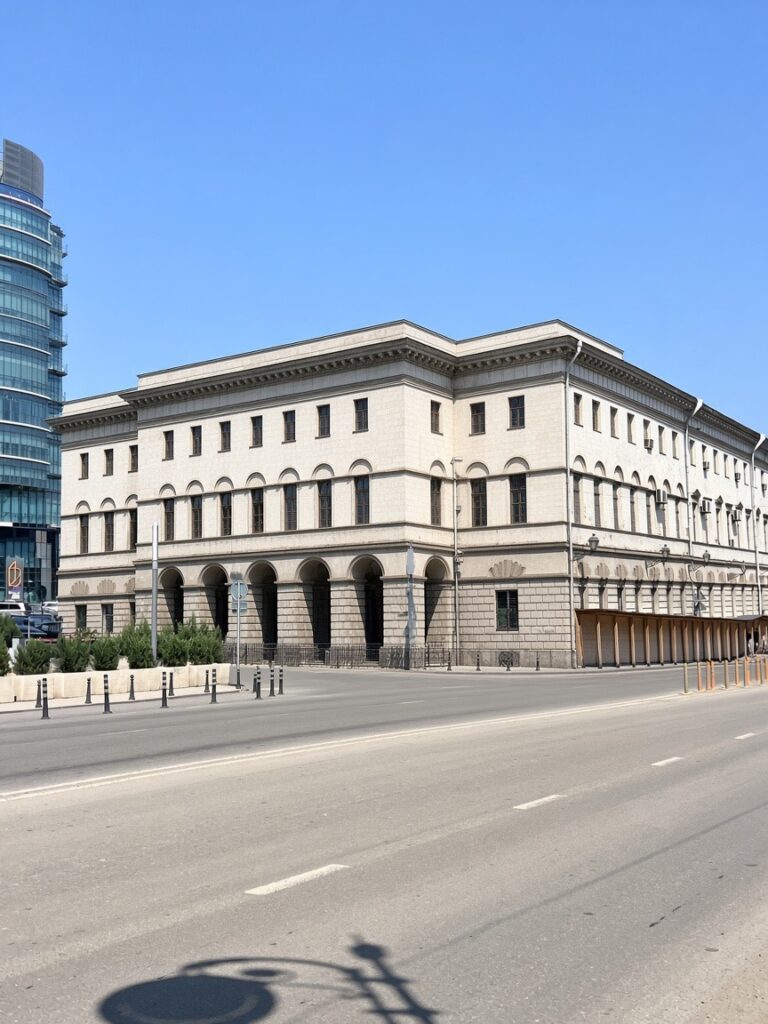
Brattish Military headquarter, modern courtyard Marriot Tbilisi

Sixty-eight of them died while serving in Georgia, and today there are British military cemeteries in both Batumi and Tbilisi. The contingent was multinational, including soldiers from Scotland, Wales, Ireland, and even India. The headquarters of the British military command was located in the building on Liberty Square where the Courtyard by Marriott Tbilisi now stands. While military commanders did not always have good relations with Georgian authorities or the local population, there was another side to the British presence.

Besides the military, an important diplomat, Oliver Wardrop, played a major role in Georgia. He served in the country from 1919 to 1921, but his first visit was much earlier, in 1887. After that journey, he wrote the book The Kingdom of Georgia, probably one of the first introductions of Georgia to the British public.

Wardrop fell deeply in love with Georgia and its culture. Together with his sister, Marjory Wardrop—friends from a conservative family in the SevenOaks district—he became a strong supporter of Georgian independence. Oliver Wardrop also played a key role in the United Kingdom recognizing Georgia as an independent state in 1920.

Unfortunately, in the same year the British army left Georgia, the country was occupied by the Soviet Red Army. Georgia remained part of the Soviet Union until it regained independence in 1991.

Marjory Wardrop also developed a profound interest in Georgia. Inspired by her brother’s letters, she learned the Georgian language and became the first person to translate several Georgian literary works into English, including the famous epic poem The Knight in the Panther’s Skin by Shota Rustaveli. She impressed Georgian intellectuals with her knowledge of the language at a time when literacy in Georgia was relatively low.

The house where Oliver Wardrop lived as British commissioner 1919-1921 , modern writers house Machabeli street

Marjory later visited Georgia in 1894, where her host was the renowned Georgian writer and public figure Ilia Chavchavadze. She was received with great honor. The house where Oliver Wardrop lived in Tbilisi still exists today, and there is also a monument dedicated to the Wardrop siblings in the city. Oliver loved Georgia so deeply that he gave his daughter the Georgian name Nino, after Saint Nino, the woman who brought Christianity to Georgia in the 4th century.

Of course, one small blog post is not enough to cover all the fascinating details of the British-Georgian historical connection—there is still much more to say. I will continue writing about it in future posts.If you ever travel to Georgia, you can join one of the special tour

Mukhran Guliashvili

Statue of Wrdops in Tbilisi

Mihály Zichy: The Man Who Laid the Foundations of Georgian–Hungarian Relations

Mihály Zichy: The Man Who Laid the Foundations of Georgian–Hungarian Relations

Everything started in the 19th century, when modern Georgia was not an independent country as it is today. At that time, Georgia had been annexed by the Russian Empire. In 1801, the empire abolished the Georgian monarchy and exiled the royal family, the Bagrationi dynasty, to Siberia. The Bagrationi dynasty had ruled the country since the 9th century. Politically, this marked the end of the Kingdom of Georgia.

However, there was also a paradox. During the 19th century the Russian Empire was strongly influenced by European culture. Russian emperors actively invited European architects, painters, and decorators to work in the empire.

One of them was the Hungarian painter Mihály Zichy. He was born in 1827 in the village of Zala in Hungary. In 1847 he moved to St. Petersburg, where he was invited by the Russian emperor Alexander II of Russia to work as an illustrator for the imperial court.

Later he received an order to illustrate works by the famous Russian writer Mikhail Lermontov, who had lived in Tbilisi for some time. In 1881 Zichy traveled to Georgia to experience the atmosphere of the Caucasus in order to create illustrations for Lermontov’s poem The Demon. However, the publishing project was eventually cancelled and the illustrations were never published as originally planned.

Despite this, Zichy stayed in Tbilisi, and this unexpected turn led him to one of the greatest achievements of his career. He became the illustrator of the masterpiece of Georgian literature, The Knight in the Panther’s Skin by Shota Rustaveli.

For Georgians, this epic poem holds a cultural importance similar to the role of William Shakespeare in the United Kingdom. Zichy created 26 illustrations for a new edition of the book, and Georgian society was astonished by the quality of his work.

The famous Georgian painter Lado Gudiashvili later described Zichy’s illustrations as one of the greatest visual interpretations ever made of the poem.

Zichy himself deeply loved Georgia and the Georgian people. He once remarked that Georgians are very generous: “If you do something for them, they try to do even more in return.”

In gratitude, the Georgian people honored him. Today, a statue of Mihály Zichy stands in Alexander Garden, very close to Rustaveli Avenue and Orbeliani Square.


Mukhran Guliashvili – Local Tour Guide Tbilisi
Literature:

Mukhran Guliashvili – Local Tour Guide
1. Beno Gordeziani. Zichy in Georgia. 2nd edition. Tbilisi: “Soviet Georgia” Publishing House, 1966.

2. Guram Sharadze. Mihály Zichy and Georgian Culture. Tbilisi: “Khelovneba” (Art) Publishing House, 1978.