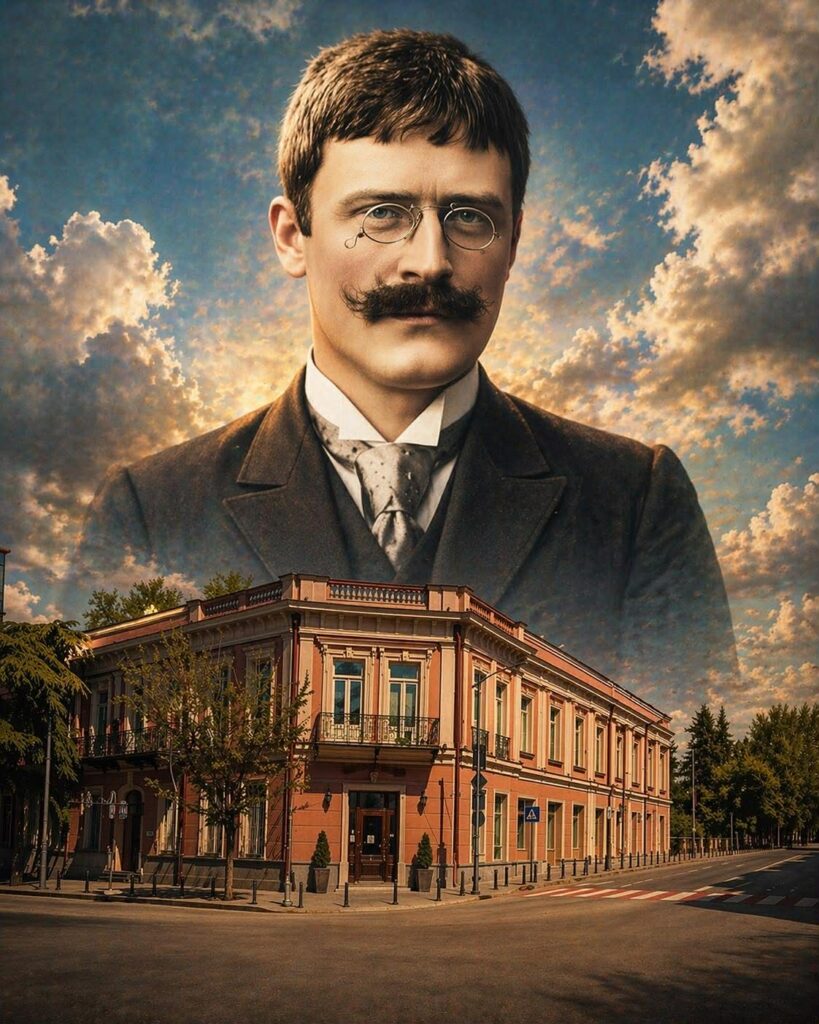
As part of my blog series about people who built connections between Georgia and their home countries, today I want to talk about the Norwegian writer Knut Hamsun (born 1859 in Lom, Norway), a Nobel Prize laureate, who traveled to Georgia in 1899 with his wife.
Hamsun traveled under various names to avoid attention. Rather than spending time with the elite, he wanted to experience ordinary Georgian life, meet local people, and immerse himself in the country. He fell in love with Georgia, and his impressions were later recorded in his book In a Fairy‑tale Land: Experienced and Dreamt.
Hamsun, a well-traveled man who often disliked the countries he visited, made an exception for Georgia. He even expressed a wish to spend his final days there.
The Route and Impressions
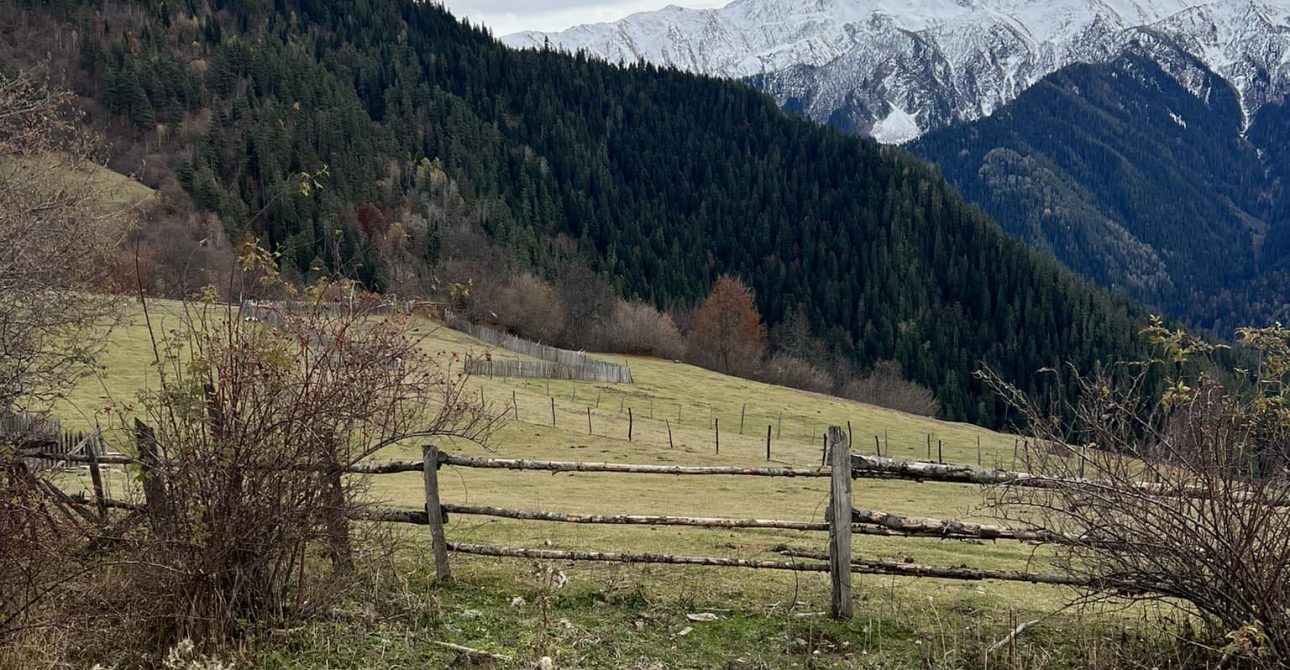
He first arrived via Dariali, from Russia into Kazbegi. He was immediately captivated by the view of Mount Kazbek:
“At a sharp bend in the road, on the right side, a valley suddenly opens before the eyes, and very close appears Kazbegi with its glacier shining in the sun. Tall, stern, and silent, it astonishes us with its power. We are filled with an indescribably overwhelming feeling: this is a completely different world, where Kazbegi, surrounded by mountains bound by an oath of loyalty, looks down upon us from above…
This country does not resemble any other country I know, and I am filled with the feeling that I would gladly spend my whole life living here.”
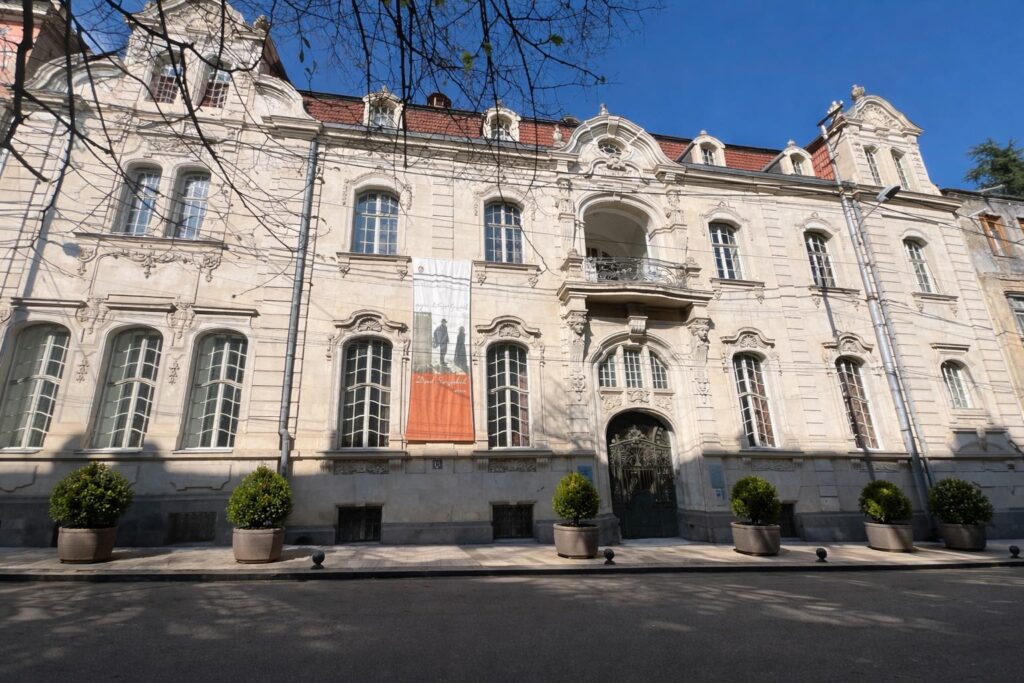
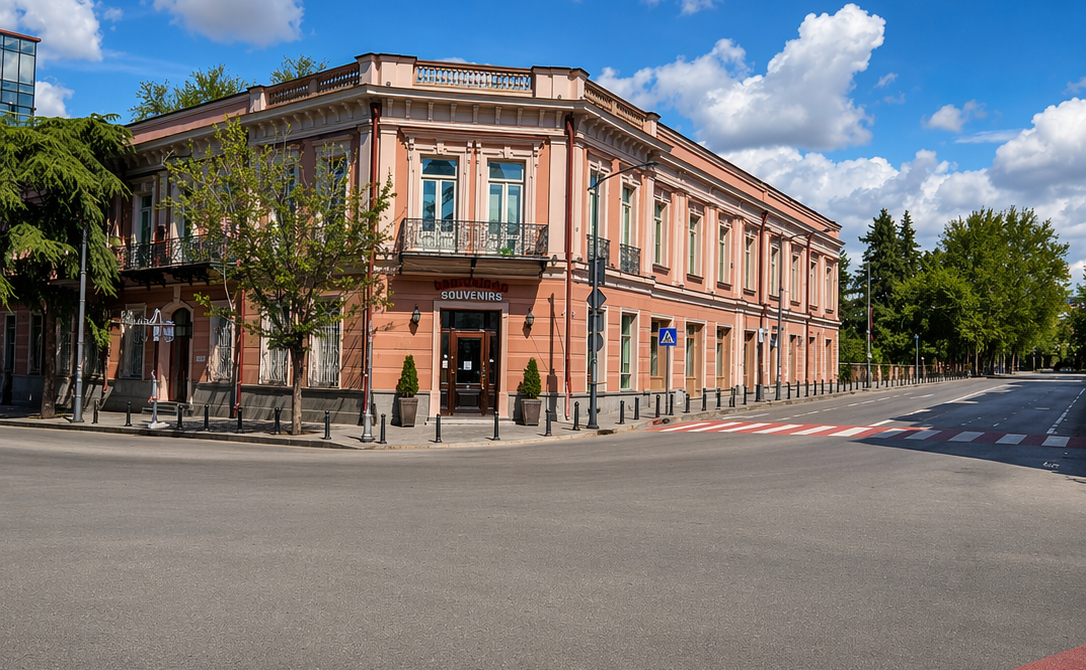
Afterward, he continued to Tbilisi, where he stayed at the London Hotel, the city’s finest at the time. Built in 1875 by German architect Richter and managed by his daughter, it was a private hotel until the Soviet era, when it became a police building. Today, the building still stands on Atoneli Street.

In Batumi, Hamsun stayed at the Bel Vie Hotel, near the seaside.
Observations About Georgia
In his writings, Hamsun reflected on the slower, more harmonious life of the Caucasus:
“This world is unlike any other I have ever seen, and I still think that I could stay here for the rest of my life. We descended into the valley. Vineyards began to appear. In the forest, walnut trees grow…
The Caucasian knows nothing about the fluctuations of the New York Stock Exchange; his life does not resemble a horse race held at a hippodrome. He lives slowly and unhurriedly, nourishing himself with the fruits of trees and the meat of sheep.
Can it really be said that Europeans and Yankees are superior to the Caucasians in any way? God knows! It is such a debatable question that no one but God can answer.
Never again in my life will I experience a more astonishing and splendid fairy tale. Especially remarkable was the journey through the mountains from Vladikavkaz toward Tbilisi. People there are more beautiful, the wine is redder, and the mountains are higher. I feel that I could live for an entire year near Mount Kazbek.”
Legacy
Unfortunately, Hamsun never returned to live in Georgia. He died at the age of 93 on February 19, 1952, in Nørholm.
Hamsun was the only major writer to visit Georgia without meeting any local literary colleagues. There was no ceremonial reception or traditional supra (feast) offered—he preferred to remain incognito.
Despite his Norwegian fame, Hamsun remains relatively unknown in his home country. According to prominent Georgian professor Levan Berzenishvili, Hamsun’s controversial political stances—such as his support for Germany during the Nazi occupation of Norway—likely contributed to this
Mukhran Guliashvili
Used sources:
1. In a cultural history or travel narrative
The Hotel de Londres in Tbilisi stands as more than an architectural relic — it is a crossroads of history where European artists and thinkers once lingered. When Knut Hamsun paused there in 1899, he found not just shelter but a moment of reflection in a reading room cluttered with the travel guides of the age, underscoring how even ordinary spaces can shape extraordinary impressions of place.
2. To support a theme about Georgia as a cultural crossroads
As travelers like Hamsun, Tchaikovsky, and Curzon passed through Tbilisi, their experiences revealed the city’s position on the cultural map of Eurasia — a bridge between East and West where local character met global curiosity.
3. In an academic or reflective essay
Historical places such as the Hotel de Londres remind us that cities are living archives. The memories of writers and composers who stayed in its rooms continue to enrich our understanding of Tbilisi’s place in literary and artistic history